Journal · 09 Sep 2026
Best Durable Streetwear for Construction Workers in 2026

Table of Contents
- Why Job-Site Gear Needs a Street-Level Upgrade
- Quick Comparison: Top Durable Streetwear Picks
- What Makes Streetwear Durable Enough for a Construction Site
- How to Choose Durable Work Hoodies That Don't Quit
- High-Quality Cotton Work T-Shirts Built for the Long Shift
- Best Practices for Layering on Construction Sites
- Wear Them Hard: Styling That Works On Site and Off
- The Bottom Line: Gear That Earns Its Keep
- Frequently Asked Questions
Last Updated: September 9, 2026
The job site is the last place you'd expect to find streetwear, yet the best durable streetwear for construction workers in 2026 is the gear that moves from the concrete pour to the city street without missing a beat. The tradesman finishing a framing job at dusk is the same person grabbing a coffee before sunrise, and he refuses to own two wardrobes. At PJR Built Different, we built our name on that refusal, heavyweight apparel forged in twenty years of professional kitchen chaos, not focus groups.
Why Job-Site Gear Needs a Street-Level Upgrade
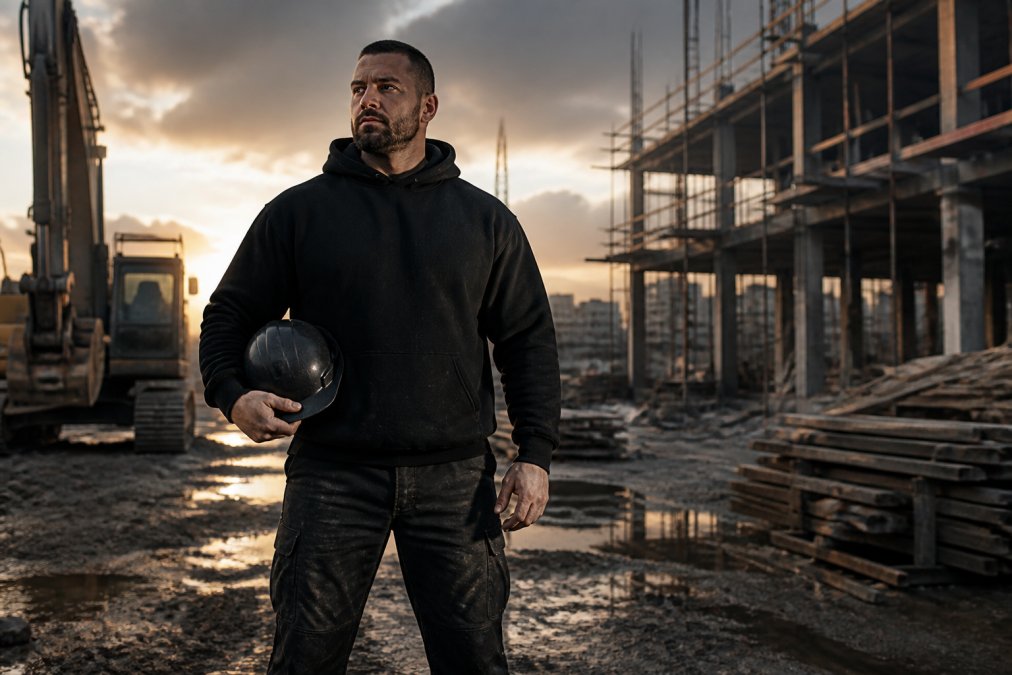
Most workwear falls into two traps: it either looks like a costume or falls apart like cheap merch. The modern tradesperson wants gear that handles abrasion and reinforced pockets during the shift, then transitions to a bar without screaming "uniform."
The upgrade starts with fabric weight and construction. Lightweight fashion tees have no place near a rebar cage. What matters is heavyweight canvas-level cotton, triple-stitched seams, and a cut that allows movement without bagging out. The best durable streetwear for construction workers is the piece you forget you're wearing because it's doing its job.
Quick Comparison: Top Durable Streetwear Picks
When you strip away the hype, the choice comes down to construction quality, fabric weight, and honest pricing. Here's how the core pieces stack up for the grind.
| Piece | Fabric & Build | Price (NOK) | Best For |
|---|---|---|---|
| Men's heavyweight hoodie | Cotton/poly fleece, 3-panel hood, pouch pocket | 383.50 | All-day warmth that holds its shape |
| Men's heavyweight t-shirt | Ring-spun cotton, regular fit | 271.50 | Base layer or solo wear on warm days |
| Men's heavyweight long sleeve | Heavyweight cotton, durable construction | 227.50 | Layering under a shell or wearing alone |
| Heavyweight sweatpants | 60% cotton / 40% polyester fleece, relaxed fit | 496.50 | Cold mornings and off-site comfort |
| Garment-dyed heavyweight t-shirt | 100% cotton, structured fit | 214.50 | Lived-in colour that won't wash out |
The standout for most tradespeople is the heavyweight hoodie at 383.50 NOK. It delivers the thermal insulation and durability you need on site without the bulk that restricts movement. For warmer months, the heavyweight t-shirt is the workhorse you'll reach for daily.

What Makes Streetwear Durable Enough for a Construction Site
Durability isn't a feeling; it's a specification. The best durable streetwear for construction workers is defined by measurable choices in fabric and assembly. Look for heavyweight ring-spun cotton, more fibre per square metre than standard knits, for a smooth face that resists snags and pilling. Construction details matter just as much as the cloth. Triple-stitched seams prevent blowouts at the shoulders and sides. Reinforced pockets handle the daily load of tools, phones, and gloves.
How to Choose Durable Work Hoodies That Don't Quit
A work hoodie is the most abused piece of clothing you own, subjected to sun, wind, concrete dust, and the constant friction of a tool belt. When choosing durable work hoodies, start with the fleece. A cotton-poly blend gives warmth, and it holds its structure after dozens of washes.
Fit is the second decision. A boxy, relaxed cut allows layering for brutal early mornings, but it shouldn't be so loose it catches on scaffolding. The PJR heavyweight hoodie, at 383.50 NOK, hits this balance: heavy fleece that holds the shoulder line after a twelve-hour service, a taped hood that stays put, and a pouch pocket deep enough for your hands or a phone. Cut for the shift, not the Instagram mirror.
High-Quality Cotton Work T-Shirts Built for the Long Shift
The t-shirt is the foundation of any layering system, and high-quality cotton work t-shirts are where most brands cut corners. A standard fashion tee uses lightweight knit that shrinks, twists, and loses shape after a few cycles. The right work tee starts with heavyweight ring-spun cotton, soft against the skin but armor against the daily grind.
For construction work, a regular fit beats a slim cut; you need room to move, reach, and bend without fabric binding across the shoulders. The PJR heavyweight t-shirt at 271.50 NOK delivers exactly this: heavyweight ring-spun cotton, a structured fit that doesn't shrink, and a clean look that works under a hi-vis vest or on its own after the shift. Run hot? The garment-dyed version at 214.50 NOK gives the same durability with a lived-in colour from day one.

Best Practices for Layering on Construction Sites
Temperature swings on a job site are brutal: frozen at dawn, sweating by mid-morning. The standard advice, base, mid, shell, is true but useless without specifics. The streetwear mindset changes the game: you're layering for a quick transition from the physical grind to the urban environment without looking like you're wearing a costume.
The Base Layer: Sweat Management, Not Just Warmth
Most guys grab a cotton tee and call it a base layer. The better play is a heavyweight synthetic or merino blend that wicks sweat. The streetwear twist: you don't need a skin-tight athletic shirt. A regular-fit, heavyweight long-sleeve in a technical fabric manages moisture without making you look like you're headed to the gym.

The Mid Layer: Insulation You Can Shed in Seconds
The mid layer is where most guys go wrong; puffy vests and thick fleeces are a nightmare to stash when the sun breaks. The smarter move is a heavyweight hoodie you can tie around your waist in under ten seconds. The PJR heavyweight hoodie earns its place here. The 383.50 NOK price is an investment, but the cotton-poly fleece traps heat without the bulk of a traditional work sweater. The three-panel hood sits flat under a hard hat and rolls up tight enough to clip to a tool bag when shed.
The Shell: Your Last Line of Defense
The shell is your shield against wind, rain, and abrasion. But a stiff, crinkly rain jacket is a liability on site; it catches on rebar and makes every movement loud. Look for a soft-shell exterior with a breathable membrane. The key metric is breathability.
The Unique Angle: The 'Transition' Layer
Here's what most layering guides miss: the transition from site to street. You don't want to be the guy stripping off a sweaty base layer in the parking lot. Your heavyweight tee is your base, your hoodie is your mid, and your shell is a clean, minimal jacket that doesn't scream 'workwear.' When you're done, shed the shell, keep the hoodie, and you're ready for a coffee or a meeting. No costume change, no awkward bag of dirty clothes. That's the PJR Built Different philosophy: gear that moves with you through the whole day.
The Cold-Weather Add-On: The Insulated Liner
For brutal months, a thin, packable insulated liner, think a lightweight synthetic puffy, worn under your shell is a game-changer. It adds massive warmth for minimal bulk and compresses to the size of a water bottle when the sun comes out. That gives you a four-layer system.
Wear Them Hard: Styling That Works On Site and Off
The crossover between job site and street is where this category earns its name. Most 'best of' lists stop at fabric weight and seam construction, ignoring the 'streetwear' half entirely. This isn't about dressing up work clothes; it's about building a wardrobe where the same pieces do double duty without compromise.
The 'Uniform' Is Dead: Mixing Textures and Weights
The biggest mistake guys make is wearing a full matching set, same brand's hoodie with same brand's sweatpants. That reads as a costume, not style. The streetwear approach is to mix weights and textures. Pair a heavyweight, structured hoodie with rugged, broken-in denim or canvas work pants. The contrast between soft fleece and stiff denim creates visual interest and looks intentional.
The Color Palette: From Site to Street
Hi-vis yellow and safety orange have their place on site, but they scream 'worker' the moment you step off it. The streetwear palette is built on muted, earthy tones: black, grey, olive, navy. These colors hide job-site grime better than you'd think and transition seamlessly into an urban environment. Need a pop of color? Do it with a beanie or socks, not your main layer. A black heavyweight hoodie is the ultimate chameleon piece, under a hi-vis vest on site, under a leather jacket off it.
The Pant Game: Utility Meets Street Silhouette
The right pants are the foundation of the whole look. Traditional work pants are baggy and functional but look sloppy off site. The modern answer is a tapered utility pant or heavyweight sweatpants with a relaxed but not sloppy fit. The PJR heavyweight sweatpants at 496.50 NOK are a prime example. The 60% cotton / 40% polyester fleece gives them a substantial drape, not a flimsy jogger look. The relaxed thigh tapers to the ankle, keeping them from catching on debris and giving a cleaner line. Deep side pockets handle your phone and wallet; elastic cuffs keep the cold out. They're a legitimate alternative to jeans for the commute home.
The Styling Rule: Details Make the Difference
The difference between 'workwear' and 'streetwear' is in the details. A plain, boxy hoodie is workwear. A hoodie with a clean, minimal chest graphic or subtle tonal logo is streetwear; it shows you made a choice. The same goes for accessories: a simple beanie, rugged watch, or clean pair of boots elevates the whole outfit. Avoid oversized logos or cartoonish graphics; that's fast fashion, not streetwear. The goal is confident and understated, not loud.
The Confidence Factor: Own the Look
The final piece is attitude. Streetwear isn't just about the clothes; it's the confidence to wear them. When you're wearing gear built to last and fitted right, you stand taller. You're not wearing a costume; you're wearing gear that reflects who you are, someone who works hard and doesn't need to shout about it. That's the PJR Built Different mindset: not following trends, but setting your own standard.
The Bottom Line: Gear That Earns Its Keep
The best durable streetwear for construction workers isn't about following trends; it's about respecting the work. Skip the brands that treat workwear as a costume and the fashion labels that can't handle a real shift. Look for heavyweight fabrics, honest construction, and a fit that moves with you.
PJR Built Different builds exactly that. Our hoodies and tees come from two decades in the trenches, not from a marketing boardroom. We take no shortcuts, and we answer to no investors, so the only thing we're selling is gear that holds up. If you're hard on your clothes and refuse to replace them every season, that's the standard we build to. Contact us to see the difference that real construction makes.
Frequently Asked Questions
What makes durable streetwear tough enough for construction sites?
It comes down to fabric weight and construction. Look for heavyweight cotton or cotton-poly fleece, triple-stitched seams, and reinforced stress points like the shoulders and elbows. Abrasion resistance matters more than a soft hand-feel.
How do I choose durable work hoodies that last a full year of daily wear?
Start with fabric density. A heavyweight fleece with a high cotton percentage holds its structure and resists pilling. Examine the stitching on the inside seams; double or triple-needle stitching is a sign the hoodie is built for strain. A taped hood and sturdy pouch pocket add longevity where stress concentrates. Skip hoodies with thin drawcords and cheap zippers.
Are PJR Built Different hoodies and tees suitable for active construction work?
Yes. PJR Built Different uses heavyweight ring-spun cotton and cotton-poly fleece with a structured fit that holds its shoulder through long shifts. The Men's Heavyweight Hoodie at NOK 383.50 features a pouch pocket and 3-panel hood, while the heavyweight tees at NOK 271.50 are made from dense cotton that resists tears. They are cut for movement and built without shortcuts. For cold mornings, layer the heavyweight long sleeve under a hoodie for insulation without bulk.
What is the best way to layer streetwear for cold weather on a construction site?
Use a three-layer system. Start with a high-quality cotton work t-shirt or a moisture-wicking base layer to manage sweat. Add a heavyweight hoodie or long sleeve as the middle layer for thermal insulation; the dense fleece traps heat. Finish with a waterproof and breathable shell jacket to block wind and rain. This approach lets you adjust layers as the day warms up.
How does PJR Built Different compare to traditional workwear brands?
PJR Built Different focuses on the crossover between job-site durability and streetwear aesthetics. Traditional brands often prioritize utility with a baggier fit and industrial styling. PJR uses heavyweight, garment-dyed fabrics with a structured, regular fit that looks right off the clock. The construction is comparable: reinforced stitching and dense cotton. But PJR skips the corporate backstory, offering gear with a direct, no-shortcuts ethos. The price reflects quality materials and honest production, not investor overhead.
The challenge is finding clothing that survives your life without looking like you stopped caring. PJR Built Different answers that with premium quality hoodies and t-shirts designed for the daily hustle. Our heavyweight ring-spun cotton and structured fits are built to take the wear, wash after wash, without shrinking or losing shape. Get started with PJR Built Different and gear up for the grind.
Editorial Team