Journal · 17 Sep 2026
Best Long Lasting Streetwear Brands: 2026 Quality Guide

Table of Contents
- Why Most Streetwear Falls Apart (And What Lasts)
- Streetwear Fabric Weight Guide: GSM and What It Means
- How to Identify Quality Clothing Construction
- Heavyweight Cotton Streetwear: Why Fabric Density Wins
- Best Long Lasting Streetwear Brands: The Shortlist
- Cost-Per-Wear: The Only Price Metric That Matters
- Garment Care: How to Make Heavyweight Streetwear Last
- Frequently Asked Questions
Last Updated: September 17, 2026
Why Most Streetwear Falls Apart (And What Lasts)
Most streetwear dies in the wash. Not on the street, not on the grind. In the drum of a machine, after a handful of cycles, the collar ripples, the print cracks, and the fit sags into something shapeless. That is the real test of long lasting streetwear, and most labels fail it before the first season ends. This guide from PJR Built Different breaks down what separates gear that survives a year of daily wear from gear that quits in three months.
Streetwear Fabric Weight Guide: GSM and What It Means
Fabric weight is measured in grams per square metre, written as GSM. It tells you how much cotton sits in every square metre of cloth, and it is the single fastest way to predict whether a garment will last. Lightweight tee fabric often sits around 140-150 GSM. Heavyweight cotton streetwear typically runs 200 GSM and above, which is why it holds structure instead of clinging.
GSM Benchmarks for Tees, Hoodies, and Long Sleeves
| Garment | Lightweight | Midweight | Heavyweight |
|---|---|---|---|
| T-shirt | 140-160 GSM | 170-190 GSM | 200-220+ GSM |
| Long sleeve | 150-170 GSM | 180-200 GSM | 200-220+ GSM |
| Hoodie | 220-250 GSM | 260-300 GSM | 300+ GSM |
A 220 GSM tee is roughly 45% heavier than a 150 GSM tee. That extra density is what stops the fabric from going see-through, twisting in the wash, or losing its shoulder line.

How to Identify Quality Clothing Construction
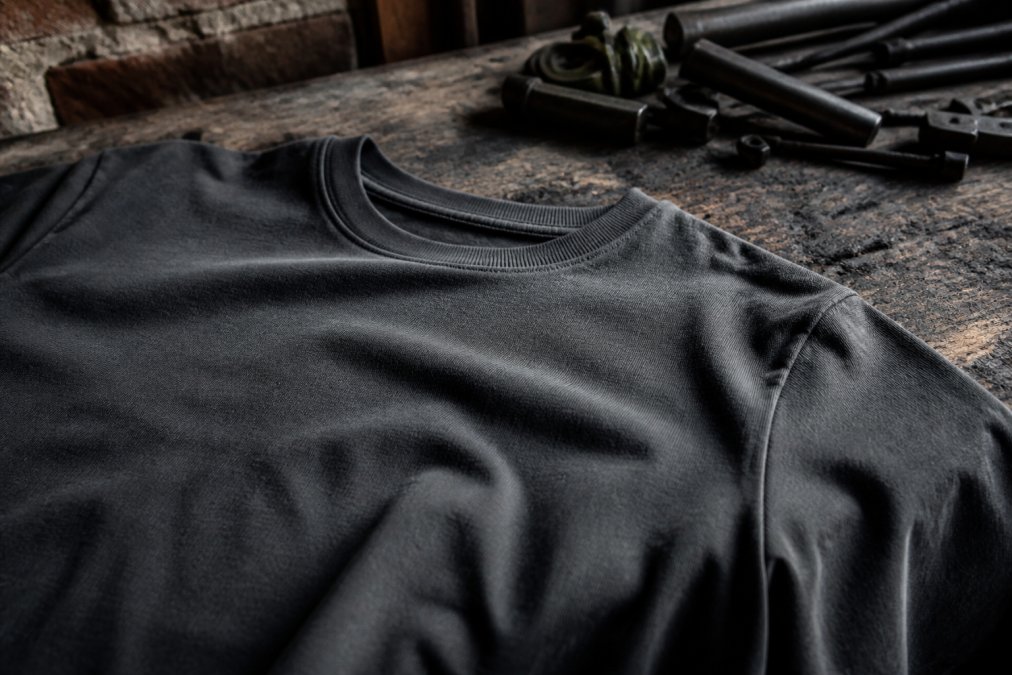
Construction is where a garment either earns its price or quietly cheats you. Check the seams first. Reinforced seams and double-needle stitching at the cuffs and hem are the marks of a piece built to take wear. Single stitching on a stress point is a countdown timer.
Stitching, Seams, and the Details That Matter
- Collar: Look for a ribbed or topstitched collar. A flimsy collar is the first thing to ripple.
- Shoulders: Twill-taped neck and shoulders resist stretching over time.
- Side seams: Side-seamed fits hold shape better than tubular cuts.
- Print: Screen printing durability depends on how the ink bonds to the fabric, not how bold the graphic looks.
- Pre-shrunk: Pre-shrunk fabric means the garment has already done its shrinking before it reaches you.
Heavyweight Cotton Streetwear: Why Fabric Density Wins
Density is the quiet advantage. Denser cotton resists pilling, holds colour longer, and keeps its silhouette through repeated washing. It also drapes better, which is why heavyweight cotton streetwear reads as premium on the body without any logo doing the work.
Best Long Lasting Streetwear Brands: The Shortlist
A shortlist is only worth reading if it tells you what to check, not just what to buy. The best long lasting streetwear brands share the same tells: they publish fabric weight, they reinforce stress points, they pre-shrink or garment-dye, and they do not hide behind a logo. Below is the shortlist built on those standards, plus the checklist you should run on any label before you spend a single krone.
The Durability Checklist Every Label Should Pass
Run this on any brand before you commit:
- Published GSM. If the label will not tell you the fabric weight, assume it is light.
- Stitch type at stress points. Double-needle at cuffs, hem, and armholes. Single-needle on a stress point is a countdown timer.
- Collar construction. Ribbed or topstitched. A flimsy collar ripples first.
- Side seams. Side-seamed fits hold shape; tubular cuts twist.
- Pre-shrunk or garment-dyed. Both signal the label thought past the first wash.
- Print method. Screen print durability depends on ink-to-fabric bonding, not graphic boldness.
If a brand fails three of those six, it is fast fashion wearing a streetwear costume.
PJR Built Different: Built in the Kitchen, Tested on the Grind
PJR Built Different is a father-and-son label forged in the kitchen, born from over two decades of professional service. No investors, no shortcuts, no seasonal gimmicks. Just heavyweight cotton built to survive a twelve-hour shift and the walk home after it.
Pros:
- Published fabric weights and construction details
- Reinforced seams, pre-shrunk fabric, garment-dyed finishes
- Built for tradespeople and daily wear, not display
Cons:
- Heavyweight fabric feels stiff until broken in
- Limited colourways compared to mass-market labels
What the Rest of the Market Gets Wrong
Most labels on a 'best streetwear' list are ranked by hype, not by how the garment survives month six. A brand can have a cult following and still ship a 150 GSM tee with a single-stitched collar. That is not streetwear. That is a billboard with sleeves.
How to Vet a Brand in Five Minutes
- Check the product page for GSM. No number, no buy.
- Zoom the collar and cuff photos. Look for double stitching.
- Search the brand name plus 'shrinkage' or 'after wash'. Real wearers tell the truth.
- Look for pre-shrunk or garment-dyed language.
- If the label only sells through hype drops with no spec sheet, walk.
That is the shortlist standard. Hold every brand to it, including the one you already love.
Cost-Per-Wear: The Only Price Metric That Matters
Cost-per-wear is the purchase price divided by the number of times you actually wear the garment. A tee worn three times a week for two years beats a cheaper tee worn twice a month for six months, every single time. Run the numbers before you judge a price tag.
Garment Care: How to Make Heavyweight Streetwear Last
Care decides how long the fabric lasts, no matter how good the construction is. But care is not just washing. It is a maintenance system: wash, dry, store, repair, repeat. Most guides stop at the first two steps. That is why most heavyweight cotton dies young.
The Wash Rules That Actually Matter
- Wash cold. Heat breaks down cotton fibre and sets print cracking. Cold water protects dye and structure.
- Turn inside out. Shields prints, embroidery, and the face of the fabric from abrasion.
- Skip the dryer entirely. Hang dry. Heat is the enemy of cotton, prints, and elastic alike.
- Wash less often. Air garments between wears. Most daily-wear pieces do not need a wash after one use.
- Use less detergent. Residue stiffens fabric and dulls colour over time.
- Zip and button before washing. Zippers and buttons chew fabric in the drum.
Drying and Storage Without the Damage
- Hang dry in shade. Direct sun fades dye faster than any wash cycle.
- Reshape while damp. Heavyweight cotton holds shape best when laid flat or hung with structure.
- Store folded, not hung, for knits. Hangers stretch shoulders on heavy fleece and tees.
- Cedar or airflow. Damp storage is how mildew and musty smells start.
Repair and Upcycling: The Step Nobody Talks About
This is the gap. No top-ranking guide tells you how to fix a garment, which is strange, because repair is the single cheapest way to extend the life of heavyweight streetwear. A 220 GSM tee with a blown seam is not dead. It is a ten-minute job.
Common repairs and how to approach them:
- Blown side seam or cuff. Re-stitch with a double-needle or backstitch. Match thread weight to fabric weight; thin thread on heavy cotton snaps again.
- Rippled collar. A collar that has stretched can sometimes be re-set by dampening and pressing, but if the ribbing is gone, it is a replace job. Prevention beats repair here.
- Cracked print. Screen prints that have cracked cannot be fully restored, but a patch or embroidery over the area turns damage into design.
- Small holes. Darning or a visible mend in contrast thread is now a style choice, not a flaw.
- Faded garment-dyed pieces. Fading is the point on garment-dyed fabric. Let it happen.
Upcycling angles that actually work:
- Cut a worn heavyweight tee into a cropped fit or a sleeveless layer.
- Turn a dead hoodie into a work apron or a tool roll.
- Use old heavyweight cotton as patch material for other garments.
- Re-dye faded pieces with a home dye kit to reset the colour.
The Maintenance Calendar
- After every wear: air out, spot clean if needed.
- Every few wears: cold wash, inside out, hang dry.
- Every season: inspect seams, collars, and cuffs for early failure.
- When something fails: repair before you replace.
Garment care is not fussiness. It is the difference between a heavyweight hoodie that lasts three winters and one that lasts one. And when care fails, repair picks up the slack.

Frequently Asked Questions
What makes a streetwear brand actually long lasting?
Fabric weight, stitch density, and pre-shrunk cotton. A tee at 220 g/m² with reinforced collar and shoulder seams will outlast a 140 g/m² fast-fashion blank every time. Look for double-needle hems, twill-taped necks, and pre-shrunk fabric. Brands that publish these specs, like PJR Built Different, are telling you the garment is built for daily wear, not a season.
How can you tell if a hoodie is built to last?
Check the fabric weight first. A hoodie under 250 g/m² will pill and lose shape fast. The PJR Built Different heavyweight hoodie sits at 271 g/m² with a 50/50 cotton-poly fleece, double-lined hood, and double-needle stitching throughout. Run your hand inside the cuff: if the ribbing feels thin or loose, it will stretch out. Reinforced seams and matched drawcords are signs the maker expects you to wear it hard.
Are expensive streetwear brands always more durable?
No. Price often reflects hype, not construction. A NOK 800 graphic tee with a 140 g/m² body will crack and shrink faster than a NOK 240 heavyweight cotton tee built at 220 g/m². Judge by the specs: fabric weight, stitching quality, and whether the brand pre-shrinks the cotton. Cost-per-wear tells the real story. A tee you wear 100 times at NOK 240 costs NOK 2.40 per wear.
How should you care for heavy-duty streetwear to extend its life?
Wash cold, hang dry. Heat is what kills heavyweight cotton: it shrinks the fibre, fades garment-dyed colour, and cracks screen prints. Turn graphic tees inside out before washing to protect the print. Skip the dryer entirely. A heavyweight tee washed cold and hung dry will hold its shape and colour through years of wear, not months.
Why is fabric weight important for durable streetwear?
Fabric weight, measured in GSM, determines how the garment holds shape, how it drapes, and how long it survives. Lightweight cotton under 150 g/m² thins out and loses structure after a few washes. Heavyweight cotton at 200 g/m² and above keeps its silhouette, resists pilling, and handles daily wear. The PJR Built Different premium heavyweight tee uses 220 g/m² combed ring-spun cotton for exactly this reason.
The grind does not care about your excuses, and neither does your wardrobe. Cheap gear quits on you mid-shift, mid-season, mid-everything. PJR Built Different builds apparel for people who refuse to take shortcuts: heavyweight hoodies and tees with reinforced seams, pre-shrunk fabric, and published fabric weights, forged from two decades in professional kitchens with no investors and no filler. Get started with PJR Built Different and wear gear that holds up as long as you do.
Editorial Team