Journal · 15 Sep 2026
Evrmore vs Defiant Ones Clothing: 2026 Streetwear Verdict

Table of Contents
- Evrmore vs Defiant Ones Clothing: The Quick Comparison
- Fabric Weight and Material Quality: What the Labels Don't Tell You
- Streetwear Alternatives to Fast Fashion: Why Construction Beats Hype
- High-Quality Hoodies for Men: Fit, Silhouette and Daily Wear
- Cost-Per-Wear: The Only Price Math That Matters
- Washing and Care for Heavyweight Garments
- The Verdict: Which One Earns a Place in Your Rotation
- Frequently Asked Questions
Last Updated: September 15, 2026
Evrmore vs Defiant Ones Clothing: The Quick Comparison
Evrmore vs Defiant Ones Clothing is a comparison between two streetwear labels that both sell heavyweight basics and graphic-led pieces, and the honest answer is that neither is the automatic winner. What decides it is construction: fabric weight, stitch work, and how the garment behaves after fifty washes. This breakdown from PJR Built Different looks at both labels through that lens, then measures them against a third option.
Here's the part most comparison articles skip. A hoodie is not a logo. It's a textile engineering problem, and the labels rarely tell you what you actually need to know.
Below, we'll walk through fabric weight, fit, cost-per-wear, and care, so you can pick the piece that survives your actual week instead of the one with the loudest drop.
Fabric Weight and Material Quality: What the Labels Don't Tell You
Fabric weight is measured in grams per square metre (GSM), and it's the single most useful number on a garment. A 220 g/m² tee holds its shape through a full shift. A 140 g/m² tee drapes soft and thin, and it starts losing structure after a few months of regular wear.
Both Evrmore and Defiant Ones Clothing lean into heavyweight cotton for their core pieces, which puts them ahead of fast-fashion basics that often sit closer to 140-160 g/m². The gap shows up in the shoulders and collar first, because that's where a light fabric collapses.
What the labels won't tell you is the finishing. Look for:
- Combed ring-spun cotton, which removes short fibres and produces a smoother, stronger yarn
- Side-seamed construction instead of tubular bodies, which stops the twist that ruins cheaper tees
- Single-needle or double-needle stitched hems, which resist blowout at the stress points
- Pre-shrunk fabric, which is the difference between a tee that fits and a tee that fits once
At PJR Built Different, the Men's premium heavyweight t-shirt and Men's premium heavyweight tee run 220 g/m² combed ring-spun cotton with reinforced collars and shoulders. That's the spec sheet doing the talking, not a graphic.

Textile Exchange materials overview
Streetwear Alternatives to Fast Fashion: Why Construction Beats Hype
Streetwear alternatives to fast fashion win on one metric: how many times you can wear the piece before it looks tired. Fast fashion optimises for the first wear and the first photo. Construction-first labels optimise for the two hundredth.
Evrmore and Defiant Ones Clothing both sit in the middle of that spectrum. They're not fast fashion, and they're not workwear either. They're streetwear labels with an urban aesthetic and a design philosophy that leans on graphics and drops. That's a legitimate lane. It's just not the same lane as a garment built to survive a working week.
The trade-off is real. A drop-driven model rewards novelty, and novelty doesn't care whether the print survives twenty washes. A construction-driven model rewards durability, which is a slower sell but a better wardrobe staple.
Here's what most guides miss: the fabric is only half the story. The other half is what happens at the seams, and that's where you can actually tell the two philosophies apart without buying anything.
The four failure points, in order of how often they kill a garment:
- The collar. A ribbed collar with elastane recovers its shape. A self-fabric collar (cut from the same body fabric) stretches out and never comes back. Look at the collar first, it's the cheapest place to hide a shortcut and the most visible place it shows.
- The shoulder seam. On a tubular body, there's no shoulder seam to fail because the fabric is a continuous tube, but the body twists after washing. On a side-seamed body, the shoulder seam is the stress point, and it needs a taped or reinforced finish or it pulls open under a backpack strap.
- The hem. A single-needle hem with a clean fold resists blowout. A cheap overlock hem frays from the inside and the damage is invisible until the stitch line gives.
- The print. Plastisol ink sits on top of the fabric and cracks when the fabric flexes. Water-based and discharge inks bond into the fibre and fade with the garment instead of peeling off it. Neither is inherently better, but a plastisol print on a heavyweight tee that gets tumble-dried is the fastest way to a cracked graphic.
This is the part the brand pages won't put on a spec sheet, because 'single-needle hem' doesn't sell a drop. But it's the difference between a tee you replace every season and a tee that's still in rotation in year three. Weight is a proxy for quality, not a guarantee of it, and the seam is where the guarantee actually lives.
At PJR Built Different, the Men's premium heavyweight t-shirt and Men's premium heavyweight tee run 220 g/m² combed ring-spun cotton with side-seamed construction, reinforced collars and shoulders, and a finish spec that's written down rather than implied. That's the standard the brand came out of professional kitchens with, gear either survives the pass or it gets replaced, and nobody on the line has time to baby a hem.

Textile Exchange materials overview
High-Quality Hoodies for Men: Fit, Silhouette and Daily Wear
High-quality hoodies for men come down to three things: the shoulder line, the hood structure, and the cuff recovery. Get those right and the hoodie works from the job site to the pub without looking like you slept in it.
Evrmore and Defiant Ones Clothing both offer hoodies in the heavyweight range, and both cut toward a relaxed silhouette that suits the urban aesthetic. That's a real strength. The weakness is that relaxed cuts hide poor construction for the first few months.
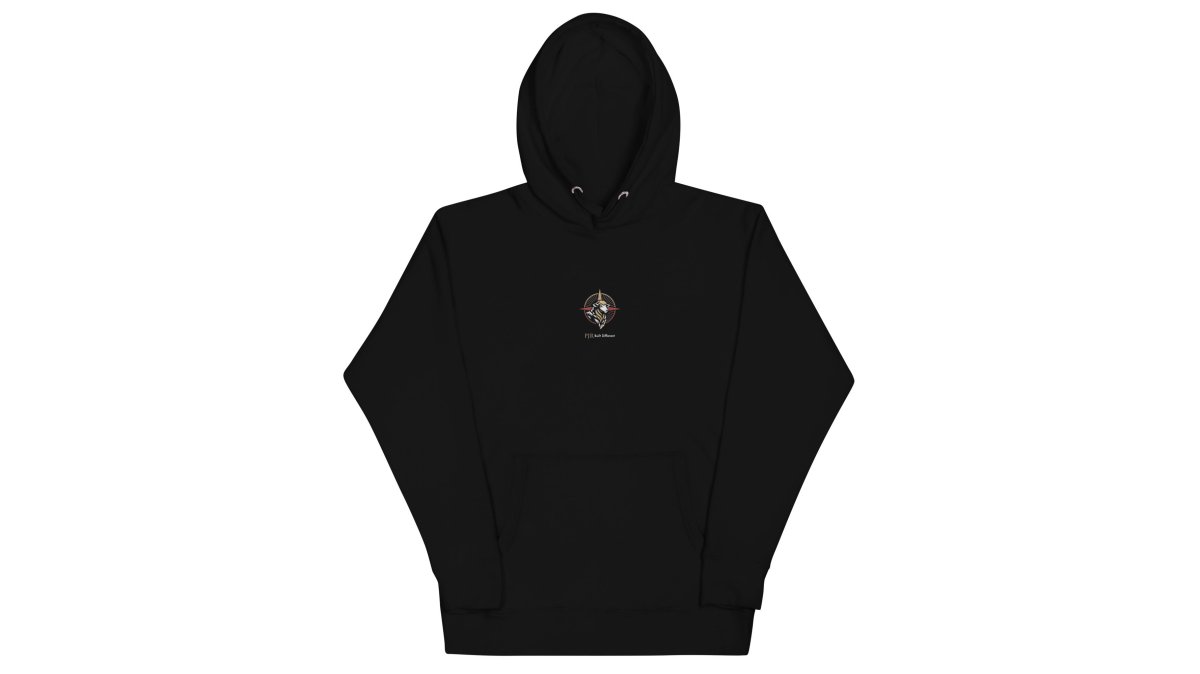
The PJR Built Different heavyweight hoodie runs an 8.0 oz/yd² (271 g/m²) 50/50 cotton-poly fleece with a double-lined hood, matched drawcord, and 1x1 rib cuffs and waistband. That's the reason the cuffs still grip after a year instead of flaring out.
Fit matters more than weight for daily wear. A hoodie that's cut for a specific body type fails everyone else. The PJR hoodie uses a unisex cut with a structured shoulder.
Cost-Per-Wear: The Only Price Math That Matters
Cost-per-wear is the purchase price divided by the number of times you actually wear the garment.
So run it.
What actually moves the per-wear number:
| Piece | Price (NOK) | Fabric Weight | Best For |
|---|---|---|---|
| Men's premium heavyweight t-shirt | 162.50 | 220 g/m² | Daily grind, layering |
| Men's premium heavyweight tee | 240.50 | 220 g/m² | Clean finish, no front graphic |
| Father & Son heavyweight t-shirt | 253.50 | 142 g/m² | Graphic tee that survives washing |
| Men's organic oversized tee | 352.50 | Heavyweight organic cotton | Relaxed fit, quiet branding |
| Men's heavyweight hoodie | 383.50 | 271 g/m² | Cold weather, daily rotation |
Norwegian Consumer Authority guidance on marketing claims

Washing and Care for Heavyweight Garments
The Verdict: Which One Earns a Place in Your Rotation
Frequently Asked Questions
How do Evrmore and Defiant Ones Clothing compare on fabric weight?
Both brands sit in the mid-weight range for streetwear, typically landing between 180 and 240 g/m² on their core tees. That's wearable but not heavy. If you want fabric that holds structure through a full workday, look for 220 g/m² and up. Heavier cotton resists stretching at the collar and keeps its shape after repeated washing, which is where lighter blanks start to fail.
Are these brands good streetwear alternatives to fast fashion?
They sit above fast fashion on construction and below it on volume, which is the point. Fast fashion turns trends around in weeks and cuts fabric weight to hit low prices. Independent labels like these keep runs smaller and use heavier cotton, so the garment survives more than a season. The trade-off is fewer drops and less size availability.
What should I look for in high-quality hoodies for men?
Check three things: fabric weight (270 g/m² or more for real warmth), a double-lined hood that holds its shape, and ribbed cuffs with spandex so they don't stretch out. Double-needle stitching at the seams matters too. A hoodie built this way survives a full shift without pilling or losing its shoulder line.
Does a higher price actually mean better durability?
Not automatically. Price tracks brand positioning as much as construction. The honest measure is cost-per-wear: divide the price by how many times you realistically wear it before it fails. A 380 kr hoodie worn 150 times costs 2.50 kr per wear. A 200 kr hoodie that pills and loses shape after 30 wears costs 6.70 kr. Heavier fabric and reinforced seams shift that math.
How should I wash heavyweight cotton to make it last?
Wash cold, inside out, on a short cycle with similar colours. Skip the tumble dryer; heat is what shrinks cotton and cracks screen prints. Hang dry in shade. If a print matters to you, turn the garment inside out before every wash and never iron directly over the graphic. Pre-shrunk fabric helps, but cold washing and air drying do most of the work.
Your wardrobe takes a beating, and most streetwear isn't built for it. PJR Built Different makes heavyweight hoodies and tees from 20+ years of kitchen experience, with no investors and no shortcuts: 220 g/m² combed ring-spun cotton tees, a 271 g/m² double-lined hood hoodie, and pre-shrunk fabric across the line. Get started with PJR Built Different and build a rotation that outlasts the hype cycle.
Editorial Team