Journal · 25 Sep 2026
High Quality Streetwear for Men: Built to Last

Table of Contents
- What Makes High Quality Streetwear Different
- Identifying Premium Streetwear Quality: Fabric Weight and Construction
- Durable Streetwear Fabrics That Actually Survive Daily Wear
- The PJR Built Different Collection: Streetwear Staples Worth Your Money
- How to Store Streetwear to Keep It Fresh and Maintain Its Value
- Premium Quality vs. Fast Fashion: Where Your Money Actually Goes
- Frequently Asked Questions
Last Updated: September 24, 2026
What Makes High Quality Streetwear Different
High quality streetwear for men isn't about logos or hype. It's about fabric weight, construction standards, and the difference between a shirt that lasts three months and one that lasts three years. The distinction separates brands built on shortcuts from those built on craft.
Most streetwear collapses under real use, seams split, graphics crack, fabric loses shape. Fast fashion prioritizes margin over durability. High quality streetwear starts with material selection and never compromises on assembly.
At PJR Built Different, we've spent two decades in professional kitchens watching what actually survives daily wear. That experience shaped every piece we make. The difference shows in fabric weight measured in grams per square meter, in stitching patterns that reinforce stress points, and in dyes that bond with fiber instead of sitting on top of it.
Identifying Premium Streetwear Quality: Fabric Weight and Construction
Understanding what separates premium streetwear from fast fashion comes down to two things: how heavy the fabric is and how it's sewn together.
Why Fabric Weight Matters
Fabric weight is measured in grams per square meter (g/m²). Standard t-shirts use 150-180 g/m²; premium streetwear starts at 220 g/m². Heavier fabric holds shape longer and resists pilling.
High quality streetwear has body, it doesn't cling or droop. Weight keeps oversized cuts structured.
Consider the textile industry standards for fabric durability, heavier fabrics consistently outlast lighter alternatives in longevity testing. A 220 g/m² tee will outlast a 160 g/m² tee by years, not months.
Stitching and Seam Standards
Premium streetwear uses double-needle stitching at stress points: armholes, shoulders, neckline, hem. Some brands add a third pass for extra durability.
Single-needle stitching fails first under daily wear. Double-needle means two parallel lines, if one breaks, the other holds.
Reinforced collar and shoulder construction is engineering, not decoration. The men's premium heavyweight tee uses reinforced shoulders where abuse concentrates.

Durable Streetwear Fabrics That Actually Survive Daily Wear
Not all fabrics perform equally. The choice between ring-spun cotton and standard cotton, between garment-dyed and printed graphics, determines whether your streetwear investment lasts or disappoints.
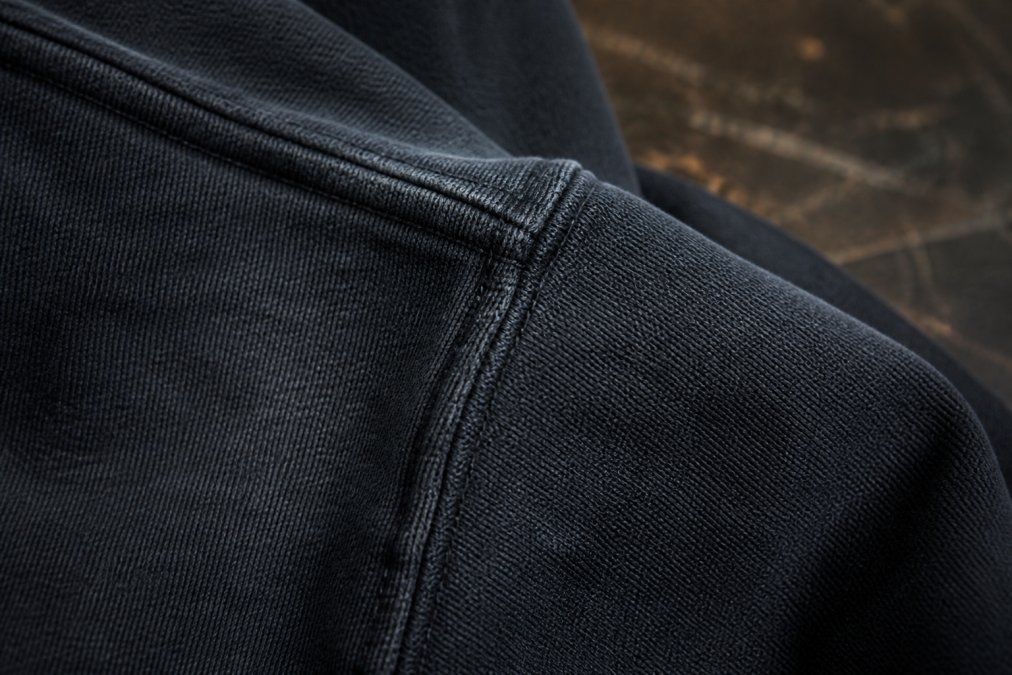
Ring-Spun Cotton vs. Standard Cotton
Ring-spun cotton is combed before spinning, removing short fibers and aligning longer strands. The result: smoother yarn that pills less and holds shape longer.
Standard cotton contains more short fibers that break loose during washing, creating pilling.
Ring-spun feels smoother and looks better after twenty washes. The men's premium heavyweight t-shirt uses 100% combed ring-spun cotton at 220 g/m², the combination that separates fresh-looking streetwear from tired pieces.
Garment-Dyed vs. Printed Graphics
Garment-dyed means the finished piece is dipped in dye, color penetrates fibers. Printed graphics sit on top.
Printed graphics crack and peel inevitably. Ink bonds to surface, not fiber. After thirty washes, cracks appear; after fifty, damage is obvious.
Garment-dyed pieces fade evenly across the entire garment. The men's garment-dyed heavyweight t-shirt won't crack because color is part of the fabric, not layered on top.

The PJR Built Different Collection: Streetwear Staples Worth Your Money
Building a wardrobe of high quality streetwear means choosing pieces that work together, survive daily wear, and adapt to your lifestyle. The foundation pieces matter most, but so does understanding how to layer them and style them for different contexts.
Heavyweight Tees: The Foundation Layer
A quality tee is the foundation, the piece tested most. The men's premium heavyweight tee uses 100% combed ring-spun cotton at 220 g/m² with structured fit and small embroidered mark.
The 220 g/m² weight works for all body types, it prevents clinging on larger frames and provides body on leaner builds.
The men's garment-dyed heavyweight t-shirt delivers bold presence with a front graphic that ages gracefully instead of cracking. Pair with dark jeans or cargo pants.
The men's premium heavyweight t-shirt is the workhorse, same ring-spun construction, simpler package. It layers without bulk and stands alone.
Styling context: Wear the embroidered-mark tee with oversized trousers or relaxed-fit jeans for a balanced silhouette. The understated branding pairs well with statement outerwear. Wear the garment-dyed tee with fitted bottoms to let the graphic breathe. Pair the minimal tee with anything, it's the neutral that makes other pieces work.
Hoodies Built for the Long Haul
The men's heavyweight hoodie uses 50/50 cotton-poly blend at 271 g/m² (vs. standard 180-200 g/m²). Double-lined hood, matched drawcord, and double-needle stitching prevent fraying and seam failure.

The weight works for layering and standalone wear without compressing. The poly blend reduces shrinkage compared to 100% cotton.
Weight creates structure for all body types, it doesn't cling on larger frames or disappear on leaner builds.
Styling context: Wear the heavyweight hoodie with tapered pants or slim jeans for contrast. The weight of the hoodie balances fitted bottoms. Wear it oversized with relaxed trousers for a full streetwear silhouette. Layer it under a denim or leather jacket for added texture and dimension.
Oversized Cuts Without the Sloppy Look
Oversized streetwear fails without weight, it looks droopy. The men's organic oversized tee uses heavyweight organic cotton with dropped shoulder and high neck to keep the silhouette structured.
The men's box tee offers another oversized option. Both pieces prove oversized means intentional proportions backed by quality fabric.
Styling context: Wear oversized tees with fitted bottoms, tapered jeans, slim cargo pants, or fitted trousers. This creates visual balance. Pair oversized pieces with structured outerwear like denim jackets or overshirts. Avoid pairing oversized top with oversized bottom; the result reads unintentional rather than intentional.
Building a Capsule: How These Pieces Work Together
Start with 3-4 heavyweight tees in neutrals, one garment-dyed tee, one hoodie, one oversized piece. This six-piece foundation works with any bottoms and outerwear.
Buy one piece monthly rather than six at once.
How to Store Streetwear to Keep It Fresh and Maintain Its Value
Proper care and storage determine whether your investment holds shape, color, and value. Most men buy premium pieces then destroy them through careless washing and storage.
Washing Protocol That Preserves Fabric Integrity
Cold water washing is non-negotiable. Hot water weakens fiber bonds and accelerates fading, especially in garment-dyed pieces.
Storage Conditions That Prevent Fading, Stretching, and Mildew
Store pieces away from direct light. UV exposure degrades fabric and dye irreversibly. Use opaque storage boxes or hang behind a door if needed.
Spot Cleaning and Stain Treatment
Spot cleaning extends time between washes and reduces fiber wear. Blot fresh stains immediately with a damp cloth; don't rub.
Seasonal Rotation and Inspection
Rotate your streetwear seasonally. Wearing the same pieces constantly accelerates wear on seams and fabric. A rotation system where each piece gets worn once every two weeks instead of twice weekly extends lifespan significantly.
Premium Quality vs. Fast Fashion: Where Your Money Actually Goes
The price difference between high quality streetwear and fast fashion isn't arbitrary. It reflects real differences in material and labor.
Frequently Asked Questions
What defines high-quality streetwear construction?
High quality streetwear relies on three core elements: fabric weight (measured in GSM or oz/yd²), stitching precision (double-needle seams, reinforced collars), and material choice (ring-spun cotton, garment-dyed finishes). Premium pieces use 200+ GSM cotton, single-needle edge stitches, and pre-shrunk fabric to hold shape through months of daily wear. Fast fashion typically uses 150 GSM or lighter, single-stitched seams, and untreated cotton that shrinks and warps.
How do you identify durable streetwear fabrics?
Check the fabric composition on the tag, look for 100% ring-spun cotton or 50/50 cotton-poly blends for hoodies. Ring-spun cotton has longer fibres twisted together, creating stronger yarn. For graphics, garment-dyed prints (dyed after construction) last longer than screen-printed graphics because the colour sits in the fibre, not on top. Feel the weight: premium streetwear feels noticeably thicker and denser than standard tees.
Why is premium streetwear worth the investment?
Premium pieces last 2-3 times longer than fast fashion because of superior fabric weight, reinforced construction, and pre-shrunk materials. A heavyweight tee at NOK 249 worn 200+ times costs less per wear than a cheap tee at NOK 80 worn 30 times before falling apart. High quality streetwear also holds its shape, resists pilling, and maintains colour after dozens of washes, delivering real value over time.
How should you store streetwear to keep it fresh?
Wash in cold water and hang dry to prevent shrinkage and fading. Store folded on shelves away from direct sunlight, which causes colour degradation. Keep pieces in a dry environment, moisture promotes mildew and odour. Avoid plastic bags for long-term storage; cotton needs air circulation. For hoodies and layering pieces, fold flat rather than hanging to prevent shoulder stretching. Proper storage extends the lifespan of your streetwear significantly.
What are the signs of poor-quality streetwear manufacturing?
Watch for single-stitched seams (they unravel easily), thin fabric that feels papery, graphics that crack after a few washes, and uneven dye jobs. Poor quality also shows in loose collar tags, fraying hems, and inconsistent sizing. If a piece shrinks dramatically after one wash or the graphic peels within weeks, it's fast fashion. Real quality holds up visibly, no pilling, no fading, no structural failure after months of daily wear.
Editorial Team