Journal · 02 Sep 2026
How to Spot Quality Apparel: The No-BS Guide

Table of Contents
- How to Spot Quality Apparel Before You Spend a Single Krone
- Natural Fibers vs. Synthetic Blends: What the Label Actually Tells You
- How to Check Garment Construction Like You Know What You're Doing
- Durable Streetwear Fabrics: What Holds Up and What Falls Apart
- Signs of Poor Quality Clothing Most People Miss
- The Post-Wash Test: How Quality Apparel Proves Itself Over Time
- Cost-Per-Wear: The Only Number That Actually Matters
- How to Maintain Premium Apparel So It Stays Built Different
- Frequently Asked Questions
Last Updated: September 2, 2026
How to Spot Quality Apparel Before You Spend a Single Krone
Most people buy clothes wrong. They check the logo and price, assuming the two are connected. They're not. Learning to spot quality apparel is essential if you care about what you wear and its true cost over time. At PJR Built Different, we built an entire brand around this principle: no shortcuts, no compromise, no garments that fall apart after six months of real use.

This guide cuts through the noise. You'll learn exactly what separates a garment that lasts years from one that disintegrates after a season. According to Forbrukerrådet, the Norwegian Consumer Authority, clothing-related complaints consistently rank among the most common product disputes, with fit and durability failures leading the list. Real quality lives in the construction details, the fiber composition, and how the garment performs after repeated washing.
Fabric Density and Transparency: The First Touch Test
Fabric density is the weight and tightness of the weave or knit structure. A dense fabric holds its shape, resists pilling, and blocks wind and abrasion.
Hold the garment up to light. If you can see your hand clearly through it, it's too thin to last. Quality apparel should be opaque. Grab a fold and release it. Cheap blends spring back with a papery crinkle. Good cotton recovers smoothly and settles back without aggressive creasing. For t-shirts and hoodies, fabric weight matters more than most realise. Lightweight tees under 150 gsm (grams per square metre) distort after washing and lose shape quickly. Heavyweight pieces from 200 gsm upward hold their structure wash after wash.
Natural Fibers vs. Synthetic Blends: What the Label Actually Tells You
The care label is a document. Read it like one.
Natural fibers such as cotton, wool, and linen offer breathability, colorfastness, and a fabric hand that improves with age. Synthetic blends using polyester or nylon add tensile strength and moisture management, but they increase pilling risk and reduce breathability.
A shirt listed as "100% combed ring-spun cotton" is a different product from one listed as "60% cotton, 40% polyester," even if they look identical on the hanger. Ring-spun cotton is made by continuously twisting and thinning the cotton strands, producing a stronger, softer, more durable yarn than standard cotton.
Organic cotton adds another layer. As noted in guidance from Tekstil og klær: Forbrukertips, organic textile production avoids synthetic pesticides and fertilisers, affecting both the environmental footprint and the long-term integrity of the fiber. Organic ring-spun cotton maintains softness and structure longer than conventionally grown alternatives.
The PJR Built Different Unisex Organic Cotton Creator 2.0 T-Shirt uses 100% organic ring-spun cotton for exactly this reason. No synthetic filler. No cutting corners on fiber quality.

How to Check Garment Construction Like You Know What You're Doing
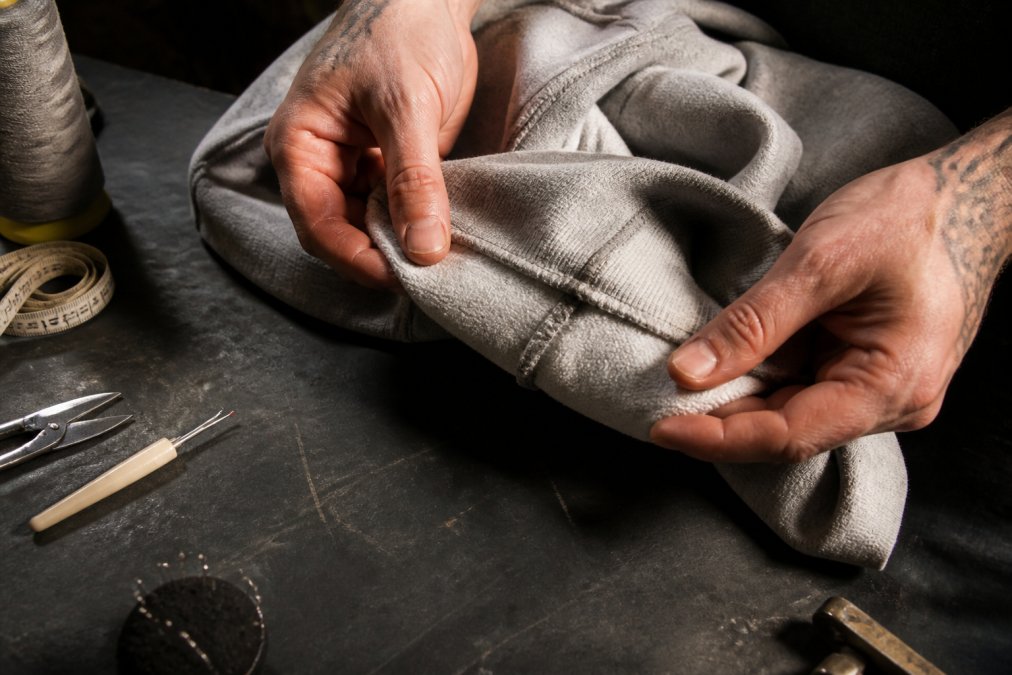
Good construction separates a garment that lasts from one that falls apart at the first stress point. Turn the garment inside out before you buy it. That's where the real quality signals are.
Seam Allowance, Flat-Felled Seams, and Finishing Methods
Seam allowance is the amount of fabric between the stitch line and the raw edge. A wider seam allowance gives the garment room to be altered and reduces the risk of seams pulling apart under stress. Cheap garments cut seam allowances to the minimum to save fabric.
Flat-felled seams are the gold standard for high-stress areas like side seams and shoulder yokes. You'll recognise them by the double row of stitching on the outside and the fully enclosed, folded seam on the inside. They're used in quality denim and workwear because they're genuinely difficult to tear.
Bound seams encase the raw edge in a separate strip of fabric, adding durability and a clean finish. Serged edges (overlocked finishes) are acceptable on less stressed seams but shouldn't be the only finishing method used throughout a garment. Raw edges with no finishing at all are a clear red flag, they fray in the wash and accelerate garment failure.
Buttonholes, Zippers, and Hardware That Won't Quit
Check buttonholes by pulling the button through firmly. The reinforcement around a quality buttonhole is tight and even, with no loose threads or fraying at the corners. Quality buttonholes use a bar tack at each end, a dense cluster of stitches that prevents the hole from extending under stress.
Cheap plastic zippers catch, skip teeth, and separate at the pull point within months. Metal zippers from established hardware manufacturers run smoothly, align precisely, and survive thousands of cycles without failing. Pull the zipper to the top and bottom several times in the store. Any hesitation or misalignment is a warning.
Lining, Interfacing, and Yoke Construction
Interfacing is a hidden layer of material fused or sewn to the inside of a garment at stress points like collars, cuffs, and plackets. It adds structure and prevents those areas from stretching or collapsing. If a collar flops immediately after a single wash, the interfacing was cheap or absent.
Yoke construction refers to the reinforced shoulder panel found on quality shirts, jackets, and hoodies. A split yoke, where the yoke is cut in two pieces on the bias, allows the garment to follow the curve of the shoulders without distorting. It's a detail that costs more to produce and signals that the pattern was engineered rather than rushed.
Durable Streetwear Fabrics: What Holds Up and What Falls Apart
The fabric choice is the single biggest determinant of how long a garment lasts under real conditions. For streetwear, the fabrics that consistently outperform are heavyweight ring-spun cotton (200 gsm and above), organic cotton with tight knit structures, and high-quality cotton-polyester blends where the polyester adds abrasion resistance without dominating the hand feel. What fails fast: thin single-jersey knits under 150 gsm, high-polyester blends that pill aggressively, and any fabric described vaguely as "soft blend" without specifying fiber content or weight.
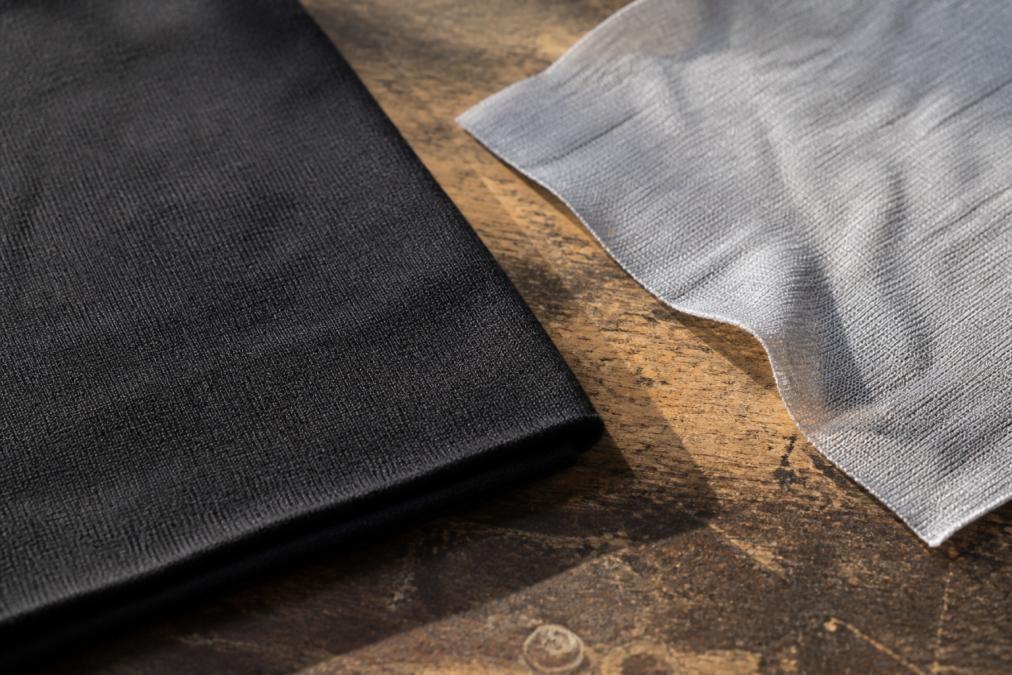
The PJR Built Different Premium Heavyweight Tee uses heavyweight ring-spun cotton because it holds its shape, resists pilling, and develops character over time rather than deteriorating.
| Fabric Type | Durability | Breathability | Pilling Risk | Best For |
|---|---|---|---|---|
| Heavyweight ring-spun cotton (200+ gsm) | High | High | Low | Everyday wear, hard use |
| Organic ring-spun cotton | High | High | Low | Daily wear, sensitive skin |
| Thin single-jersey cotton (<150 gsm) | Low | Medium | Medium | Light use only |
| High-polyester blend (>40% poly) | Medium | Low | High | Performance, not streetwear |
| Cotton-poly blend (60/40) | Medium-High | Medium | Medium | Casual, moderate use |
Signs of Poor Quality Clothing Most People Miss
The obvious signs of poor construction are easy to spot. The signs that actually matter are subtler.
Pilling, Snags, and Raw Edges After the First Wash
Pilling is the formation of small fiber balls on the fabric surface caused by friction. It indicates that fibers are breaking free from the yarn structure. Low-quality cotton and high-polyester blends pill within weeks of regular wear.
Run your thumbnail firmly across the fabric surface. If fibers catch and bunch immediately, pilling will start early. Quality ring-spun cotton resists this because the fiber alignment is tighter and the yarn is stronger.

Raw edges inside the garment, seams that fray after a single wash, and hems that unravel are signs that the finishing was rushed. Check the hem depth: a quality hem has enough fabric folded and stitched that it won't pull free, typically 2 cm or more on a t-shirt hem.
Pattern Matching at Seams and Colorfastness
Pattern matching is a definitive quality signal. On striped or checked fabrics, the pattern should continue seamlessly across seams at the side, sleeve, and shoulder. Mismatched patterns mean the pieces were cut without aligning the fabric, a production shortcut that costs nothing to avoid.
Check the colorfastness by looking at the inside of the garment. If the dye has already migrated to the lining before you've bought it, it will bleed in the wash and fade unevenly.
The Post-Wash Test: How Quality Apparel Proves Itself Over Time
Most garment testing happens before purchase. The post-wash test is the one that actually matters.
Quality apparel maintains its dimensions, colour depth, and structural integrity through repeated washing. Poor quality clothing shrinks, distorts, fades, and loses its shape within the first three to five washes.
The post-wash checklist:
- Measure before and after the first wash. Lay the garment flat, measure chest width and body length. Wash according to the care label. Measure again. More than 2 cm of shrinkage in either direction signals poor pre-shrinking during production.
- Check seam alignment. After washing, the seams should still sit where they were cut. Twisted side seams on a t-shirt indicate the fabric wasn't properly aligned during cutting.
- Assess print integrity. Screen-printed or heat-transferred graphics should show no cracking, peeling, or colour loss after the first wash.
- Feel the fabric hand. Quality cotton softens slightly after washing. Cheap blends become rougher, thinner, or develop a papery texture.
- Check the hem and cuffs. These are the first areas to distort. A quality hem stays flat and even. A poor one rolls, pulls, or starts separating.
As documented in Forbrukertilsynet guidance on textile product claims, Norwegian consumer protection rules require that products perform as described. If a garment is marketed as "durable" or "premium" and fails basic wash performance, that's a legitimate consumer rights issue.
Cost-Per-Wear: The Only Number That Actually Matters
Cost-per-wear is the only honest way to evaluate whether a garment is worth buying.
Cost-per-wear = purchase price ÷ number of times worn
A hoodie that costs NOK 500 and gets worn 200 times over three years costs NOK 2.50 per wear. A hoodie that costs NOK 250 and falls apart after 30 wears costs NOK 8.33 per wear. The cheaper hoodie costs more than three times as much per use.
For streetwear and everyday wear, a realistic target is 150 to 300 wears over two to three years. A garment that hits 200 wears is a better financial decision than one that survives 40 wears before looking destroyed. The PJR Built Different Unisex Super Heavyweight Hoodie is built for exactly this kind of longevity. Dense fabric, structured fit, clean finish. The cost-per-wear on a garment that lasts three years of regular use is far lower than anything in the fast fashion price range.
How to Maintain Premium Apparel So It Stays Built Different
Buying quality apparel is half the equation. How you maintain it determines whether it lives up to its potential.
The most common maintenance mistakes: washing too hot (most quality cotton should be 30°C or 40°C maximum), over-drying (air drying or low-heat tumble drying extends garment life significantly), ignoring the care label, not washing inside out (which protects the outer surface and reduces friction-related pilling), and storing incorrectly (heavy knitwear and hoodies should be folded, not hung).
For premium streetwear that sees daily use, washing every three to five wears rather than after every single wear extends fabric life considerably. According to Miljømerket Svanen, Nordic Ecolabel textile care guidance, extending the active life of a garment through proper care is one of the most effective ways to reduce the environmental impact of clothing consumption. Buying less and maintaining better is a more sustainable approach than buying cheap and replacing often.
Garment quality isn't a mystery once you know what to look for. Fabric density, seam construction, fiber composition, hardware durability, and post-wash performance are the real signals. PJR Built Different was built on this standard: heavyweight ring-spun cotton, clean construction, no compromises in the materials or the process. If you want quality apparel that earns its cost-per-wear, contact us and find out what built different actually means in practice.
Frequently Asked Questions
How do you identify quality clothing at a glance?
Check fabric density first, hold the garment up to light. If you can see through it, the fabric weight is too low for durability. Then run your fingers across the seams: quality apparel uses flat-felled or bound seams with no raw edges visible. Finally, check the hem depth and stitch tension. Tight, even stitching with at least 1.5 cm of hem allowance signals a garment built to last, not just to sell.
Is 100% cotton better than a 50/50 blend for streetwear?
For durability and breathability, 100% ring-spun cotton, especially heavyweight organic cotton, outperforms most 50/50 blends in real wear conditions. Blends can resist shrinkage better, but they sacrifice fabric hand, drape, and long-term textile integrity. If you run hot, work physically demanding jobs, or care about colorfastness after repeated washing, a premium 100% cotton construction is the stronger choice for daily wear.
What are the key signs of poor quality clothing to watch out for?
The clearest signs of poor quality clothing: visible serged edges on external seams, pilling after fewer than five washes, mismatched patterns at side seams, loose or uneven stitch tension, and hardware like zippers or buttons that feel hollow or light. Cheap interfacing that bubbles after washing is another dead giveaway. Fast fashion pieces often pass a visual check in-store but show their real quality after the first machine wash cycle.
How does fabric weight affect how long streetwear lasts?
Fabric weight is one of the strongest predictors of garment longevity. Heavier fabrics, typically above 200 g/m² for t-shirts and 400 g/m² for hoodies, resist pilling, maintain their shape through repeated washing, and hold print graphics without cracking. Lightweight fabrics lose tensile strength faster and are more prone to snags and distortion. For daily wear under physical conditions, fabric weight is not a luxury spec, it is a structural requirement.
Does a higher price always mean better garment quality?
No. Price reflects brand positioning, marketing spend, and distribution costs as much as actual construction. The reliable check is cost-per-wear: divide the price by the realistic number of times you will wear the garment before it degrades. A piece at NOK 350 that holds up for three years of weekly wear costs less per use than a NOK 150 piece that pills and shrinks within six months. Evaluate the seams, fabric density, and post-wash performance, not the tag.
Why is garment construction more important than brand labels?
Brand labels signal marketing investment, not manufacturing standards. Garment construction, seam type, stitch density, hem depth, interfacing quality, determines how the piece actually performs under stress. A well-constructed piece from a smaller brand with flat-felled seams and heavyweight ring-spun cotton will outlast a poorly constructed piece from a recognised name. Learn to read the construction, and brand labels become secondary information.
Editorial Team