Journal · 01 Sep 2026
How to Stop Hoodie Collars Stretching: 7 Steps

Table of Contents
- Why Hoodie Collars Stretch in the First Place
- What You'll Need Before You Start
- Step 1: The Best Way to Wash Hoodies Without Wrecking the Neckline
- Step 2: Drying Techniques That Prevent Hoodie Collars Stretching
- Step 3: How to Fix a Stretched Out Hoodie Collar
- Step 4: How to Store Hoodies to Protect the Collar Long-Term
- Common Mistakes That Destroy Necklines Faster
- Frequently Asked Questions
Last Updated: September 1, 2026
Why Hoodie Collars Stretch in the First Place
Hoodie collars stretching is one of the most frustrating ways a premium garment can age badly, and it almost always comes down to avoidable habits, not garment quality. Understanding the mechanics behind it changes how you approach every wash and storage decision.
The collar of a hoodie is a ribbed knit construction. That ribbing is designed to stretch and recover repeatedly, but it has limits. Every time heat, gravity, or mechanical agitation acts on those fibres without a recovery period, the elastic memory of the fabric weakens. Over time, the collar loses its ability to snap back to its original shape.
Three forces destroy collars faster than anything else:
- Heat: High washing and drying temperatures break down the elastane fibres woven into ribbed knit fabric, reducing their recovery capacity permanently.
- Gravity during drying: Hanging a wet hoodie from the shoulders transfers the full weight of the saturated fabric through the collar, pulling it downward and outward while it dries.
- Mechanical stress: Aggressive wash cycles, overstuffed machines, and pulling the hoodie over your head by the collar all create repeated micro-stretching events that accumulate into visible distortion.
At PJR Built Different, we build our hoodies for people who put them through daily use, construction sites, gym sessions, long shifts. The garment construction can handle the grind. What it can't compensate for is washing and storage habits that work against the fabric's structure.
The good news: most collar damage is preventable. The steps below address each failure point directly.
What You'll Need Before You Start
Before getting into the steps, gather a few basics. None of this requires specialist equipment.
| Item | Purpose |
|---|---|
| Mesh laundry bag | Reduces mechanical friction in the wash cycle |
| Mild liquid detergent | Gentler on elastic fibres than powder |
| Clean dry towels | For absorbing moisture during flat drying |
| Flat drying rack or clean surface | Prevents gravity-induced collar distortion |
| Spray bottle with cold water | For reshaping a collar without full rewashing |
You likely have most of these already. The mesh laundry bag is the one item worth buying if you don't own one. According to consumer textile care guidance from Forbrukerrådet, using a protective laundry bag is one of the most effective steps for reducing garment wear in standard household machines.
That's the kit. The method matters more than the tools.
Step 1: The Best Way to Wash Hoodies Without Wrecking the Neckline
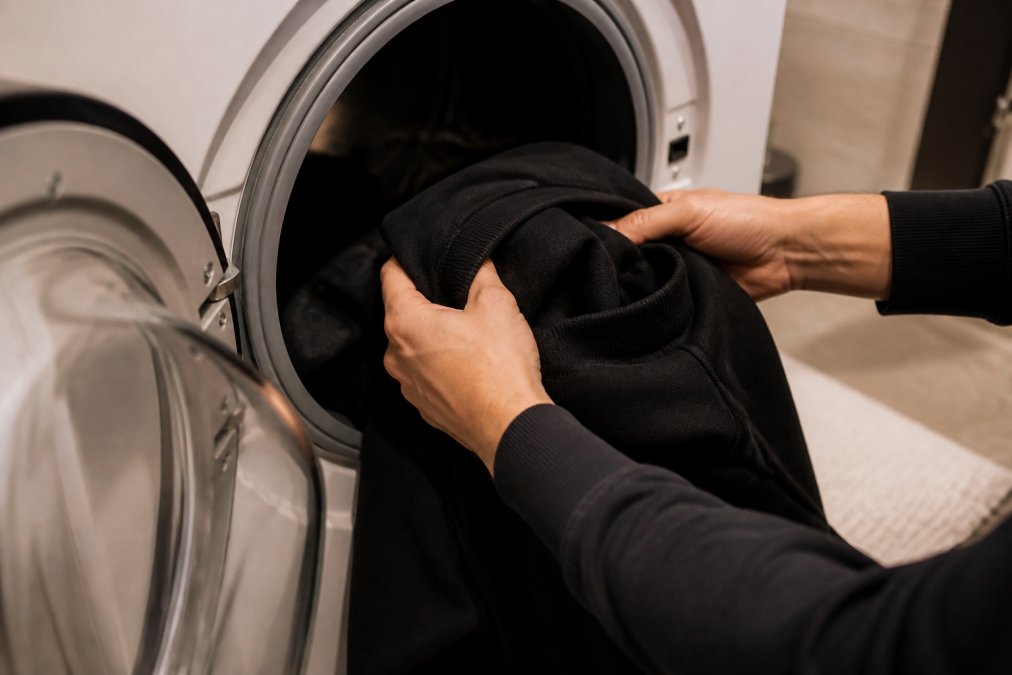
The best way to wash hoodies without damaging the collar is cold water on a gentle or delicate cycle, with the garment turned inside out and placed in a mesh laundry bag. This single combination addresses the three main causes of collar distortion: heat, friction, and mechanical stress.
Water Temperature and Cycle Settings
Cold water is non-negotiable for preserving collar integrity. Warm or hot water causes the elastane in ribbed knit fabric to soften and lose tension. Once that happens, the collar cannot fully recover its original shape.
Set your machine to 30°C maximum, and if your machine has a dedicated delicate or wool cycle, use it. These cycles use slower drum rotation speeds, which reduces the mechanical pulling and twisting that distorts collars during a standard wash. The Norwegian Standard NS-EN ISO 6330 on textile care labelling establishes the basis for care symbols on garments; when your hoodie label shows a hand-wash or 30° symbol, that recommendation exists specifically to protect the fabric structure.
Avoid using the spin cycle at high speed. A slow spin or a brief standard spin is enough to remove excess water without forcing the collar into a distorted shape under centrifugal force.
Turning Your Hoodie Inside Out
Turning the hoodie inside out before washing does two things. First, it reduces direct friction on the outer face of the collar ribbing, which is the most visible part. Second, it protects any printed or embroidered details from abrasion against other garments.
Zip up any zips before washing. Unzipped hardware acts like a small abrasive tool inside the drum, catching on fabric and creating pulls. Fasten drawstrings loosely so they don't tangle around the collar during the cycle.
A common mistake is washing hoodies with heavy items like jeans or towels. The weight imbalance in the drum increases the mechanical force applied to lighter garments. Wash hoodies with similar-weight items, or alone.
Step 2: Drying Techniques That Prevent Hoodie Collars Stretching
Drying is where most hoodie collars stretching damage actually occurs. The wash cycle gets the blame, but the dryer and the drying position are the real culprits in most cases. Getting this step right matters more than any other single decision.
Flat Drying vs. Hanging
Flat drying is the correct method for preserving a hoodie collar. Lay the hoodie on a clean dry towel or a flat mesh drying rack, reshape the collar to its original dimensions with your hands, and leave it to dry at room temperature.
The physics are simple: gravity cannot pull a collar downward if the collar is horizontal. Hanging a wet hoodie from a peg or hanger transfers the weight of saturated fabric through the collar and shoulder seams. A wet premium hoodie can hold a significant amount of water, and that weight acts on the collar continuously for hours.
If you must hang the hoodie to dry, hang it from the hem rather than the shoulders. This reverses the gravitational load and keeps the collar free of stress.
Tumble Dryer Settings If You Must Use One
The honest answer: avoid the tumble dryer for hoodies when you can. Heat is the primary enemy of collar elasticity, and tumble dryers apply sustained heat to the entire garment.
If you need to use one, select the lowest heat setting available, many modern machines have a dedicated delicate or air-only cycle. Remove the hoodie while it is still slightly damp and finish drying flat. This limits heat exposure while still saving time.
Never dry a hoodie on a high heat setting. The collar ribbing will lose elasticity permanently after repeated high-heat cycles, and no subsequent care will reverse that.
Step 3: How to Fix a Stretched Out Hoodie Collar
How to fix a stretched out hoodie collar depends on how severe the distortion is. Minor stretching can often be corrected at home. Significant distortion may require professional alteration.
For minor collar stretch, the steam method works well. Hold a garment steamer or the steam function of a household iron several centimetres from the collar, never apply the iron directly to ribbed knit fabric. Apply steam evenly around the collar while gently scrunching the ribbing with your other hand. The heat and moisture reactivate the elastic fibres, and the manual compression helps them re-set in a tighter position. Allow the collar to cool completely before wearing or storing.
For a cold-water reset, submerge just the collar section in cold water, squeeze out excess water without wringing, then reshape by hand and dry flat. This method works particularly well for collars that have been pulled out of shape by repeated over-the-head removal rather than heat damage.
A collar that has been heat-damaged repeatedly, from high-temperature washing or tumble drying, may not fully recover through home methods. In that case, a tailor can resew the collar ribbing or replace it entirely. This is worth doing for a premium garment rather than replacing it.
According to textile care guidance from Tekstil og mote, elastic knit components in garments are among the most heat-sensitive elements, and repeated high-temperature exposure causes irreversible fibre degradation that cannot be corrected by home care methods.
Step 4: How to Store Hoodies to Protect the Collar Long-Term
How you store a hoodie between wears has a direct and underappreciated effect on collar integrity. Most collar damage accumulates slowly through poor storage habits, not single catastrophic events.
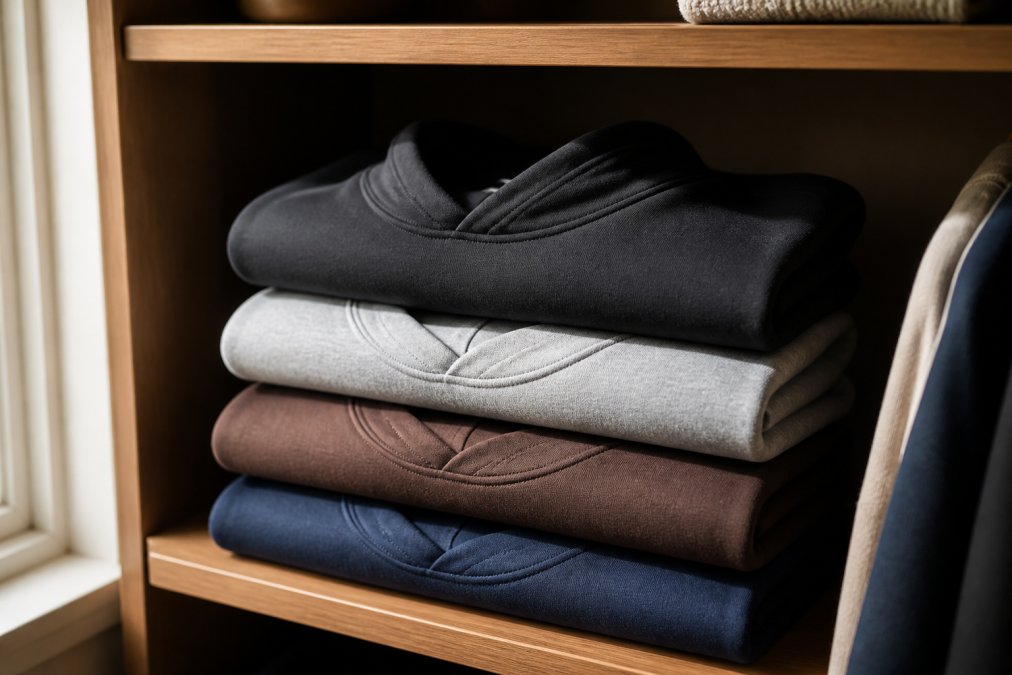
Folding is better than hanging for long-term storage. When a hoodie hangs on a standard hanger for extended periods, the weight of the body fabric pulls down through the shoulder seams, and the collar is left under constant low-level tension. Over weeks and months, this tension adds up.
To fold a hoodie correctly:
- Lay it flat on a surface, face down.
- Fold each sleeve across the back.
- Fold the bottom third up toward the chest.
- Fold the top third down so the collar sits on top, undistorted.
- Store flat or stack with the collar facing up.
If you prefer hanging, use a wide-shouldered hanger that distributes the garment's weight across the shoulder area rather than concentrating it at two narrow points. Avoid wire hangers entirely, they create pressure points that deform shoulder seams and indirectly stress the collar.
Keep stored hoodies away from direct sunlight and heat sources. UV exposure degrades elastic fibres over time, and proximity to radiators creates localised heat that affects the collar ribbing even when the garment isn't being washed.
Common Mistakes That Destroy Necklines Faster
Most hoodie collars stretching damage is self-inflicted through a handful of repeated habits. The mistakes below are the most common, and each one compounds the others.
Pulling the hoodie on and off by the collar. This is the fastest way to distort a collar. The collar is not a handle. Pull from the body of the garment or use both hands to open the collar before putting it on.
Washing at 40°C or above. Many people default to 40°C because it feels like a standard "normal" wash. For ribbed knit collars, it is too hot. Stick to 30°C or below.
Overfilling the washing machine. A packed drum means garments cannot move freely, which increases friction and mechanical stress on collar ribbing. Wash hoodies with room to move.
Drying on a radiator. Draping a hoodie over a radiator seems practical, but it combines high localised heat with gravity-induced distortion. The collar hangs downward while the fabric directly on the radiator receives sustained heat. This is among the worst combinations for collar preservation.
Ignoring care labels. The care symbols on a garment exist for a reason. As documented in the EU Textile Regulation care labelling requirements applicable in Norway, garment care instructions are legally required to reflect the actual properties of the fabric. A care label showing a 30° wash symbol is not a suggestion.
Storing while damp. Putting a hoodie away before it is fully dry creates conditions for mildew and also locks the collar into whatever distorted shape it dried in. Always ensure the garment is completely dry before folding and storing.
The thing most people don't realise: none of these mistakes are dramatic. They're small, repeated decisions that accumulate into a collar that looks worn out within a few months of purchase. Reverse the habits and the garment lasts significantly longer.
| Mistake | What It Causes | The Fix |
|---|---|---|
| Pulling collar over head | Immediate mechanical stretch | Open collar with both hands before wearing |
| Hot wash cycles | Permanent elastane degradation | Wash at 30°C maximum |
| Tumble drying on high heat | Irreversible collar loosening | Air dry flat, or use lowest dryer setting |
| Hanging wet on shoulders | Gravity-induced distortion | Hang from hem or dry flat |
| Radiator drying | Heat damage plus gravity stretch | Use flat rack at room temperature |
| Storing while damp | Collar sets in distorted shape | Dry fully before folding |
| Overfilled machine | Increased friction on ribbing | Wash with room to move |
Hoodie collars stretching is a slow problem that becomes visible all at once. By the time the collar looks visibly distorted, the damage has been building across dozens of wash cycles and storage decisions. The seven steps above address every stage: washing, drying, reshaping, and long-term storage.
PJR Built Different builds hoodies to hold up under real daily use. The garment construction is there. Pair it with the right care habits and the collar stays tight, the fabric stays structured, and the hoodie looks the way it should for years, not months. If you have questions about care or garment construction, contact us directly.
Frequently Asked Questions
Q: Why do hoodie collars stretch out over time?
A: Collar stretch comes from a combination of heat, mechanical stress, and gravity. Hot water weakens cotton fibres, tumble dryers apply heat and tumbling force, and hanging a wet hoodie lets the collar sag under its own weight. Pulling the hoodie on and off over your head repeatedly also strains the rib-knit fabric around the neckline.
Q: Can you shrink a stretched hoodie collar back to size?
A: Yes, with careful heat application. Dampen only the collar area with warm water, then use a clothes iron on a low-to-medium setting with a pressing cloth between the iron and the fabric. Gently compress the collar inward as you press rather than stretching it flat. For severe stretch, a short tumble on low heat while the collar is damp can help the fibres contract. Avoid high heat, which can scorch cotton or set the distortion permanently.
Q: Does washing hoodies in cold water prevent collar stretching?
A: Cold water is one of the most effective steps you can take. Hot water causes cotton fibres to swell and relax, which is what allows collars to lose their shape. A 30°C or cooler wash on a gentle cycle keeps fibres stable and reduces mechanical agitation on the neckline. Pair cold washing with a mesh laundry bag for extra protection. This alone extends collar life noticeably compared to regular warm or hot washes.
Q: Should I hang or fold my hoodies to protect the neckline?
A: Fold them. Hanging places constant downward tension on the shoulder seams and collar, gradually pulling the neckline out of shape. Fold your hoodie in thirds lengthwise, then fold it in half so the collar sits flat without pressure on it. Stack folded hoodies on a shelf rather than in a compressed drawer. If you must hang one, use a wide padded hanger and hang it by the body, not the collar loop.
This article was written using GrandRanker
Editorial Team