Journal · 14 Sep 2026
Streetwear for Athletic Body Types: The 2026 Fit Guide

Table of Contents
- Why Standard Streetwear Fails Athletic Body Types
- How to Style Athletic Body Type: The Rules That Actually Work
- Durable Streetwear for Construction Work: Built to Take Punishment
- The Best Hoodies for Broad Shoulders
- Building a Capsule Wardrobe for Athletic Streetwear
- Technical and Sustainable Fabrics That Perform
- Frequently Asked Questions
Last Updated: September 14, 2026
Why Standard Streetwear Fails Athletic Body Types
Most streetwear is cut for one body: narrow shoulders, flat chest, straight torso. If you carry muscle, that pattern works against you. A standard large hangs off the shoulders like a tent and strains across the chest, so you either size up and swim in fabric or size down and fight the seams. Neither looks right, and neither lasts.
This guide from PJR Built Different breaks down streetwear for athletic body types, from shoulder width to fabric weight, so you stop guessing in the fitting room.
The Quad Room Problem
The quad room problem is the gap between what fits your upper body and what fits your legs. Trousers sized to clear your quads hang loose at the waist, while anything snug enough at the waist locks your thighs. The fix is a tapered leg with stretch or a relaxed top block, not a bigger waistband.
How to Style Athletic Body Type: The Rules That Actually Work
Styling an athletic build comes down to proportion management: define the waist, respect the shoulder, and let one part of the outfit lead. Chasing oversized everything just buries the shape you trained for.
Shoulder Width and Neckline Depth
A crew neck sits high and widens an already broad shoulder line. A V-neck or a high-neck oversized cut pulls the eye down and lengthens the torso instead. Neckline depth is the fastest lever you have.
Tapered Fit vs. Boxy Cut
Tapered fit follows the body and narrows toward the hem, which suits a muscular build with a defined waist. Boxy cut drops straight from the shoulder and hides definition. Use tapered for the base layer, boxy for the outer layer.
| Fit | Best For | Watch Out For |
|---|---|---|
| Tapered | Defined waist, muscular build | Too tight across the chest |
| Boxy | Broad shoulders, layering | Swallowing your frame |
| Oversized | Dropped shoulder, relaxed days | Looking shapeless |
Durable Streetwear for Construction Work: Built to Take Punishment
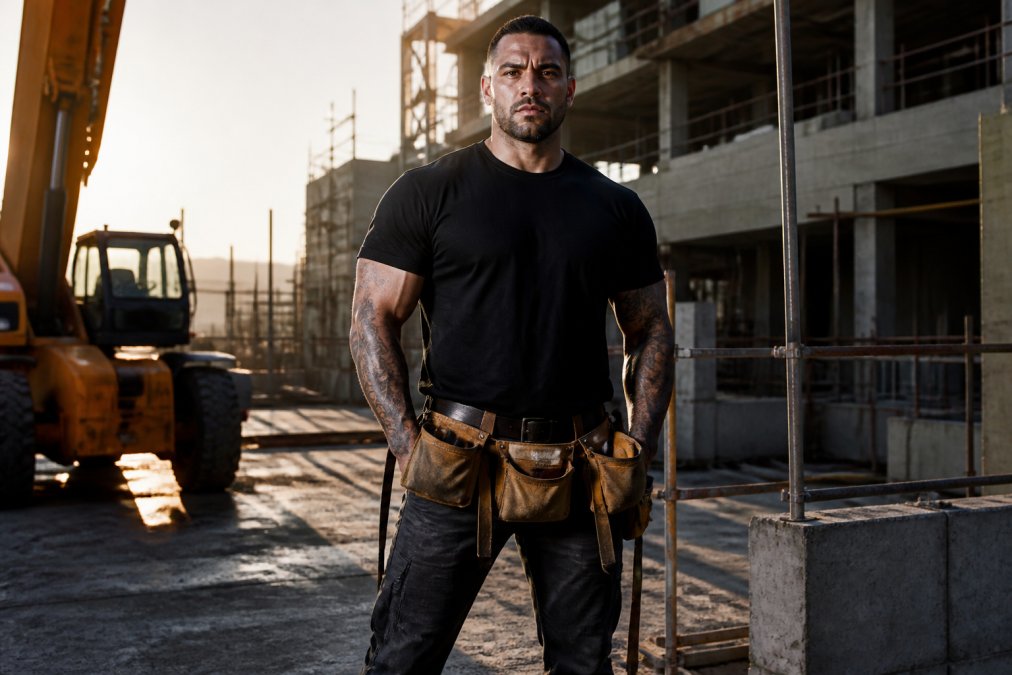
Durable streetwear for construction work lives or dies on fabric weight and garment construction, not on logos. A heavy cotton tee holds its shape through a shift; a thin one stretches at the collar by lunch.
Fabric Weight and Garment Construction
Fabric weight is measured in grams per square metre, and it decides how a garment drapes and how long it survives. Look for double-needle stitching at the hems and cuffs, twill-taped neck and shoulders, and pre-shrunk cotton so the fit you buy is the fit you keep.
The Norwegian Labour Inspection Authority guidance on protective equipment is worth knowing if you work on site, since personal protective equipment requirements sit above whatever you wear underneath.
The Best Hoodies for Broad Shoulders
The best hoodies for broad shoulders are heavyweight, cut with a drop shoulder, and built with a double-lined hood that holds its shape. Weight matters more than colour here: light fleece collapses at the shoulder seam within weeks.
PJR Built Different's heavyweight hoodie is an 8.0 oz/yd² (271 g/m²) cotton-poly fleece with a double-lined hood, matched drawcord, and 1×1 rib cuffs and waistband with spandex. The boxy heavyweight hoodie takes the other route: tightly knit fleece, dropped shoulders, overlapped neckline, cut to hold shape through a twelve-hour shift. Both give a broad shoulder room without the tent effect.

Building a Capsule Wardrobe for Athletic Streetwear
A capsule wardrobe for athletic streetwear is eight pieces that all fit the same silhouette, so everything works together without a fitting-room fight. Fewer, heavier, better-fitting garments beat a closet full of compromises. The rule is simple: every piece must clear your lats, sit on your shoulder seam, and taper toward the hem. If a garment fails one of those three, it does not enter the capsule.
The Eight-Piece Core
| Piece | What It Must Do | Fit Check |
|---|---|---|
| Heavyweight tee (220 g/m²) | Hold shape across the chest | Shoulder seam sits on the bone, not past it |
| Heavyweight long sleeve | Layer under a hoodie without bulk | Sleeve ends at the wrist bone, not the knuckle |
| Boxy heavyweight hoodie | Cover broad shoulders without a tent effect | Dropped shoulder falls 2-3 cm past the seam |
| Tapered heavyweight sweatpants | Clear quads, hold the waist | Waistband stays put when you squat |
| Relaxed-top tapered trouser | Room through the thigh, clean at the ankle | No fabric pooling on the shoe |
| Garment-dyed tee | Fade without cracking | Colour sits in the fibre, not on top |
| Organic oversized tee | Breathe on rest days | Dropped shoulder, but hem hits mid-fly |
| Heavyweight crew sweatshirt | Bridge training and street | Ribbed cuffs stay tight after ten washes |
Fit Guide by Muscle Group
Most guides tell you to "size up." That is lazy advice. Fit each zone on its own terms.

- Quads. You need a relaxed top block and a tapered leg, not a bigger waistband. A trouser that clears your thigh but gaps at the waist will read sloppy, not strong.
- Lats. The chest measurement is the trap. A tee that fits your chest but pulls at the armpit will ride up all day. Check the armhole depth, a deeper armhole gives your lats room without adding width at the waist.
- Calves. Tapered sweatpants that stop mid-calf will cut you off. Either go full-length with a ribbed cuff or choose a straight-leg cut that breaks cleanly over the shoe.
- Shoulders. The shoulder seam is the anchor. If it sits past the bone, the whole garment reads oversized whether you want it to or not.
Start with a premium heavyweight tee at 220 g/m², add a heavyweight long sleeve for cold mornings, layer a hoodie over both, and finish with heavyweight sweatpants for the days between training and work. That set covers a full week without a single compromise fit.

Technical and Sustainable Fabrics That Perform
Technical and sustainable fabrics earn their place when they hold shape and colour without chemical shortcuts, and on a muscular frame, they also have to manage heat, sweat, and stretch recovery. That is the part most guides skip. A fabric can be organic and still collapse at the shoulder seam after five washes. Performance and sustainability are two separate tests, and a garment has to pass both.
How Technical Fabrics Behave on a Muscular Frame
- Moisture management. A 100% cotton tee absorbs sweat and gets heavy, which pulls the shoulder seam down and widens your silhouette. A cotton-poly blend or a ring-spun cotton with a tight knit moves moisture to the surface and dries faster, so the garment keeps its shape through a shift.
- Stretch recovery. Elastane in the ribbing (1×1 rib with spandex, for example) lets the cuff and waistband snap back instead of stretching out. On a broad chest, that recovery is what stops a hoodie from turning into a sack by week three.
- Abrasion resistance. Twill-taped neck and shoulders spread the load of a heavy chest across the seam, so the fabric does not tear at the stress point. Double-needle stitching at the hems does the same job at the bottom.
- Thermal behaviour. Heavyweight fleece traps heat, which is great in a cold workshop and terrible in a warm gym. A 271 g/m² cotton-poly fleece is a winter piece; a 207 g/m² ring-spun cotton is a three-season piece. Match the weight to the room, not the logo.
Sustainability Without the Greenwash
Garment-dyed cotton is the clearest example of a process that is both better for the garment and better for the fibre: the dye goes into the fibre after the garment is sewn, so it fades the right way instead of cracking off the surface. Organic cotton goes further by removing synthetic pesticides from the growing stage, but it still has to be knit tightly enough to hold shape on a broad chest. The test is the same either way, does the fabric still look right after fifty washes?
PJR Built Different's garment-dyed heavyweight tee and garment-dyed long sleeve both use 6.1 oz/yd² (207 g/m²) ring-spun cotton with twill-taped neck and shoulders. The organic oversized tee goes further with heavyweight organic cotton and a dropped shoulder cut. For context on why fibre choice matters, the Ellen MacArthur Foundation's work on textile waste explains how garment longevity reduces total impact.
The Norwegian Environment Agency's guidance on textile waste is also relevant if you care where your clothes end up.
Frequently Asked Questions
How should a hoodie fit an athletic body type?
A hoodie should sit clean on the shoulder without pulling across the chest. Look for a drop shoulder that follows your natural frame, not one that fights it. The body should have room through the torso but taper slightly at the waist so you don't look like you're wearing a box. Heavyweight fleece holds its shape better than thin cotton, which means the fit stays right after a wash. Check that the cuffs and hem sit snug without cutting in.
What's the difference between slim-fit and athletic-fit streetwear?
Slim-fit cuts everything close, which strangles a muscular build through the chest and thighs. Athletic-fit streetwear keeps room where you're built and tapers where you're not. It accounts for broad shoulders, a wider back, and thicker legs without adding bulk through the waist. That's the whole point of streetwear for athletic body types: the garment follows your proportions instead of forcing you into a shape that doesn't exist.
Why is finding durable streetwear for athletic builds so difficult?
Most brands cut for one generic shape and use thin fabric that loses structure after a few washes. If you're broad through the shoulders and thick through the legs, standard sizing either pulls tight in one place or hangs loose in another. Durable streetwear for construction work and daily wear needs heavyweight fabric, reinforced seams, and a cut that respects real proportions. That combination is rare because it costs more to make.
What fabrics hold up best for high-intensity, active lifestyles?
Heavyweight ring-spun cotton at 220 g/m² or above keeps its shape through repeated washes and long shifts. Cotton-poly fleece blends in the 271 g/m² range add durability without losing softness. Garment-dyed cotton holds colour deeper in the fibre, so it fades evenly instead of going patchy. Avoid thin single-jersey cotton under 150 g/m² if you want the garment to still look right after six months of daily wear.
How do you style streetwear for a V-taper physique?
Lean into the taper instead of hiding it. A structured tee that follows your shoulder line and tapers through the midsection shows the V without squeezing. Pair it with a tapered leg or a relaxed jogger that narrows at the ankle. V-necks and high necklines both work, but keep the neckline depth shallow so the shoulder line stays the focal point. Layer with an open hoodie or overshirt to add visual width up top.
Editorial Team