Journal · 12 Sep 2026
Streetwear That Lasts for Years: A 2026 Quality Guide

Table of Contents
- Why Most Streetwear Falls Apart in Months
- Heavyweight Cotton Hoodie Quality: What the Label Won't Tell You
- How to Spot Durable Clothing Construction Before You Buy
- Cost-Per-Wear: The Math That Changes What You Buy
- Streetwear Maintenance Tips That Add Years to Your Wardrobe
- Repair and Restoration: Fix It Before You Replace It
- Streetwear That Lasts for Years: The Pieces Worth Owning
- Frequently Asked Questions
Last Updated: September 12, 2026
Why Most Streetwear Falls Apart in Months
Most streetwear fails because the fabric is too light and the construction is too cheap to survive real wear. That is the whole story. A 140 g/m² cotton tee feels fine in the shop and turns into a dishrag after ten washes. This guide from PJR Built Different covers how to buy streetwear that lasts for years, not seasons, and how to tell the difference before you spend money.
The math is unforgiving. Cheaper garments usually cost more over time because you replace them two or three times a year. Heavier fabric, denser stitching, and honest hardware cost more once and then keep going. That is the entire case for buying well.
Heavyweight Cotton Hoodie Quality: What the Label Won't Tell You
GSM, grams per square meter, is the single most useful number on a garment spec sheet. It tells you how much cotton is actually in the fabric, and it predicts how the piece will behave after a year of washing.
Here is the rough scale worth memorizing:
- Under 150 g/m²: light, see-through, built for warm weather only
- 150-180 g/m²: standard fast-fashion weight, loses shape within months
- 180-220 g/m²: solid mid-weight, holds a box fit well
- 250 g/m² and up: heavyweight territory, built for daily abuse
For hoodies, look at the fleece weight, not the shell. A heavyweight cotton hoodie worth owning usually sits at 270 g/m² or above, with a double-lined hood and ribbed cuffs that snap back instead of sagging.
How to Spot Durable Clothing Construction Before You Buy
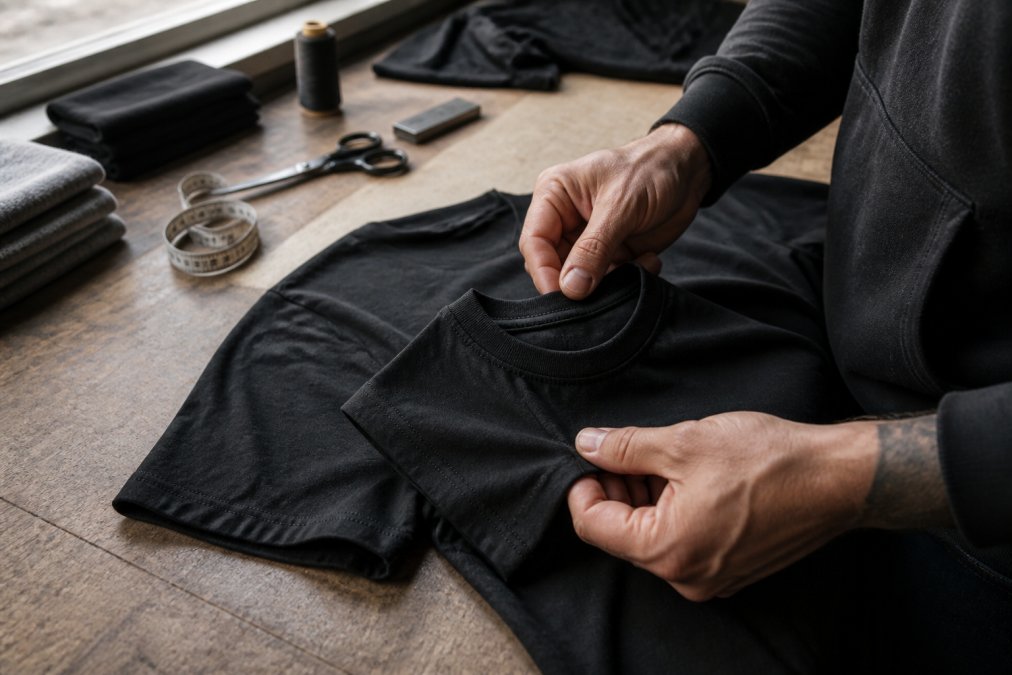
Durable clothing construction comes down to things you can check in under a minute with your own hands: stitch density, seam type, reinforcement points, and hardware quality. You do not need a lab, a loupe, or a spec sheet. You need to turn the garment inside out and know what you are looking at.
Stitch Density and Seam Strength
Count the stitches along a side seam. Six to eight stitches per inch is the minimum for a garment you plan to keep for years. Anything looser will split at the stress points: the armpit, the shoulder, the hem, and the crotch of a pair of pants. Tighter, denser stitching spreads load across more thread and more fabric, which is why it survives repeated washing and pulling.
Look at the seam type, not just the stitch count:
- Overlock (serged) seams wrap the raw edge and are the baseline for knits. They are fast and cheap, and they fray if the thread breaks.
- Flatlock seams lie flat against the skin and are common on performance and base layers. They are strong but can abrade over time.
- Double-needle stitched hems and arm openings are the marker of a manufacturer who expects the garment to be worn hard. Two parallel rows of stitching mean if one row fails, the other holds.
- Taped or bound seams at the neck and shoulders resist stretching and stop the seam from twisting after repeated washes.
A single row of stitching on a hem or cuff is a warning sign. So is a seam that puckers or pulls when you tug it gently.
Hardware, Trim, and Reinforcement Points
Hardware and trim are where a garment usually fails first, long before the fabric wears through. Check these before you buy:
- Zippers. Look for a metal or moulded-plastic zipper with a smooth pull and a locking slider. A zipper that catches, skips teeth, or feels gritty will fail within months. A quality zipper is one of the cheapest upgrades a brand can make and one of the first things cut when a brand chases a lower price.
- Eyelets and grommets. Metal eyelets outlast plastic. Plastic eyelets crack and pull through the fabric, especially on hoods and waistbands.
- Drawcords. A matched drawcord in a double-lined hood will not disappear into the channel after two washes. A single-layer hood with a thin cord will.
- Ribbing. Stretch the cuff and the hem. Good ribbing snaps back to shape. Cheap ribbing stays stretched and sags within a season.
- Twill tape. Twill-taped neck and shoulder seams resist stretching and stop the collar from losing its shape. If you can see the raw seam edge at the back of the neck, the brand skipped this step.
- Bar tacks. Small, dense stitches at pocket corners, belt loops, and stress points stop tears from spreading. If a pocket corner has no bar tack, it will rip.
Fabric Hand and Weight
Construction is only half the story. The fabric itself has to be dense enough to hold up. Squeeze the hem and check how much light passes through the fabric. If you can see your hand through a tee, it is too light for daily wear. A heavyweight cotton tee worth owning usually sits at 220 g/m² or above, and a heavyweight hoodie at 270 g/m² or above. Heavier fabric resists pilling, holds its shape, and takes far longer to wear through.

Cost-Per-Wear: The Math That Changes What You Buy
Cost-per-wear is the price of a garment divided by the number of times you actually wear it. A cheap tee worn twenty times before it fails costs more per wear than a heavy one worn two hundred times. Run the numbers once, and the decision usually makes itself.
| Garment | Price | Wears Before Failure | Cost Per Wear |
|---|---|---|---|
| Light fast-fashion tee | Low | ~20 | High |
| Mid-weight tee | Medium | ~60 | Medium |
| Heavyweight ring-spun tee | Higher | ~200+ | Lowest |
The pattern holds across hoodies, tees, and denim. Raw denim, heavyweight fleece, and structured cotton all reward the same logic: pay once, wear it for years.
Streetwear Maintenance Tips That Add Years to Your Wardrobe
Streetwear maintenance tips matter more than most people admit. The way you wash a garment decides whether it survives three years or three months, and the rules are simple.
- Wash cold, always. Heat is what shrinks cotton and fades dye.
- Turn garments inside out before they go in the drum. This protects prints and surface texture.
- Skip the dryer. Hang dry in the shade. Heat and tumbling are what break down fibre strength.
- Use less detergent than the bottle suggests. Residue dulls colour and traps odour.
- Wash heavyweight pieces less often than you think. Air them out between wears.
Shrinkage resistance is built into the fabric at the mill, through pre-shrinking or garment-dyeing. If a brand skips that step, no amount of careful washing will save the fit.
Repair and Restoration: Fix It Before You Replace It
Repair is the most underrated move in slow fashion, and almost no guide on the internet actually teaches it. Most articles tell you how to buy better. This one tells you how to keep what you already own in rotation for years. A split seam, a loose cuff, or a missing button is a ten-minute fix, not a reason to buy new.
The Repair Kit Worth Owning
You do not need a sewing machine. A small kit covers almost everything:
- A hand-sewing needle set (sharp for wovens, ballpoint for knits)
- Heavy-duty thread in black, white, and a colour close to your most-worn pieces
- A seam ripper
- Small scissors
- A thimble
- Iron-on repair patches for quick fixes
- A spare zipper pull or two
Keep it in a tin. The kit costs less than a single replacement hoodie and lasts for years.
Fixing the Five Most Common Failures
1. Split seam. Turn the garment inside out. Pin the seam closed. Use a backstitch along the original stitch line, going through the existing holes where you can. Knot off inside. The repair is stronger than the original seam if you use a backstitch.
2. Loose or stretched cuff. Stretch the ribbing back into shape and pin it. Sew a line of small stitches just inside the original seam, catching the ribbing and the sleeve. This tightens the cuff without replacing it.
3. Small hole in a knit. Darning is the fix. Thread a needle with matching yarn and weave a grid over the hole, going under and over the loose threads, then weave the opposite direction. The patch is invisible from a distance and stops the hole from growing.
4. Broken zipper pull. The zipper itself is usually fine. Replace the pull with a small split ring or a replacement pull from a sewing shop. If the slider is broken, a tailor can replace the slider without replacing the whole zipper.
5. Worn-through elbow or knee. Iron-on patches work for a quick fix. For a permanent repair, sew a fabric patch over the worn area with a whipstitch around the edge, then stitch a grid across the patch to anchor it.
When to Repair and When to Retire
Not everything is worth saving. Repair if the fabric around the damage is still strong, if the garment fits well, and if you actually wear it. Retire it if the fabric is thin across a large area, if the damage is structural (a torn-out shoulder seam on a heavy jacket), or if you have not worn it in a year. A repaired garment you never wear is still clutter.
Care and Repair Together
Care and repair are the same project. Wash cold, turn garments inside out, skip the dryer, and air them out between wears. Then repair the small failures before they become big ones. A garment that is washed carefully and repaired promptly will outlast the same garment washed hot and thrown away at the first loose thread. That is the whole game.
Streetwear That Lasts for Years: The Pieces Worth Owning
Streetwear that lasts for years starts with the pieces you wear most: a heavyweight tee, a proper hoodie, a structured overshirt. Build the wardrobe around those, and the rest follows.

At PJR Built Different, the collection is built on that principle. The Men's premium heavyweight tee runs 220 g/m² combed ring-spun cotton with a reinforced collar and shoulders, pre-shrunk so the fit you buy is the fit you keep. The Men's heavyweight hoodie uses an 8.0 oz/yd² cotton-poly fleece with a double-lined hood and ribbed cuffs that hold their shape through a full shift. Both are made for people who work in them, not photograph them.
The wardrobe staples worth the money are the ones you reach for daily. Buy those well.
Frequently Asked Questions
What fabric weight indicates high-quality streetwear?
Look for 200 g/m² (roughly 6 oz/yd²) or heavier for t-shirts, and 270 g/m² and up for hoodies. Below that, cotton gets thin fast and loses shape after a few washes. Heavier fabric holds its structure, resists pilling, and takes far longer to wear through at stress points like elbows and shoulders. Check the label for GSM or g/m² before you buy.
Does higher GSM always mean better quality in hoodies?
No. A 400 g/m² hoodie made with short-staple cotton and loose stitching will still fall apart. Fabric weight matters, but so does fiber length (ring-spun beats open-end), stitch density, and whether the seams are reinforced. A 271 g/m² hoodie with double-needle stitching and a double-lined hood will outlast a heavier one with single stitching every time.
How should you care for heavy-duty streetwear to ensure longevity?
Wash cold, inside out, and hang dry. Heat is the enemy: hot water and tumble drying shrink cotton, crack prints, and break down elastic in cuffs and waistbands. Use a gentle cycle with half the detergent you think you need. Turn garments inside out to protect any graphics. If you must machine dry, use the lowest setting. These habits alone can double the life of a heavyweight tee or hoodie.
What construction details define long-lasting streetwear?
Look for double-needle stitching at hems and seams, twill-taped neck and shoulder seams, side-seamed construction (not tubular), reinforced collar with 7/8-inch topstitching, and pre-shrunk fabric. Hardware like zippers and drawcords should feel solid, not flimsy. Check that stress points (armholes, pocket corners, collar) have bar-tack reinforcement. These details separate garments that survive daily wear from those that don't.
Most wardrobes fail because the foundation pieces were bought cheap and replaced often. PJR Built Different builds heavyweight hoodies and tees for people who would rather buy once and get on with the work: no investors, no shortcuts, just two decades of kitchen experience turned into garments that hold up. Contact us and start with the pieces you will actually wear every day.
Editorial Team