Journal · 24 Sep 2026
Why Do Screen Printed Graphics Crack? Fix It for Good

Table of Contents
- The Real Reason Screen Printed Graphics Crack (It's Not Just the Wash)
- How to Wash Screen Printed Shirts Without Killing the Print
- Why Do Prints Peel After Washing? The Science of Ink Adhesion
- Best Practices for Drying Graphic Apparel (Dryer Heat Is the Enemy)
- Visual Identification: Is Your Print Cracking or Peeling?
- Repair and Restoration: Can You Fix a Cracked Screen Print?
- Storage and Long-Term Care for Print Longevity
- What Actually Keeps a Print Alive
- Frequently Asked Questions
Last Updated: September 23, 2026
The Real Reason Screen Printed Graphics Crack (It's Not Just the Wash)
Most people blame the washing machine. That's only half the story.
Screen printed graphics crack because the ink bond fails. The print sits on top of the fabric as a layer of cured ink. When that layer gets stressed, it splits. The cracks show up along fold lines, shoulders, and chest, the spots that flex the most.
At PJR Built Different, we've spent years around garments that get worked hard. The truth is simple. Cracking starts long before your first wash. It starts with how the print was made.

Ink Chemistry: Plastisol vs. Water-Based
Two inks dominate screen printing: plastisol and water-based. They fail in different ways.
Plastisol ink is a plastic-based ink that sits on top of the fabric. It cures under high heat. It's thick, bright, and durable when done right. But it doesn't stretch with the shirt. When the fabric moves, the ink layer doesn't, so it cracks.
Water-based ink soaks into the cotton fibers. It feels softer and moves with the fabric better. The trade-off? It fades faster and needs a perfect curing process to last.
Neither ink is bad. Bad curing is bad. That's the part most guides skip.
How to Spot the Difference Before You Buy
Run your hand over the print. If it feels like a raised rubber layer, that's plastisol. If it feels almost flush with the fabric, that's water-based.
Here's what to check before you spend money:
- Thick, raised print = plastisol, more prone to cracking at stress points
- Thin, soft print = water-based, better stretch but can fade
- Uneven texture = poor curing, walk away
- Sharp edges with no bleed = a sign of a clean, well-cured print
A cheap print feels plasticky and stiff. A good one flexes with the shirt.
How to Wash Screen Printed Shirts Without Killing the Print
Wash graphic tees inside out, in cold water, on a gentle cycle. That one routine prevents most cracking. But if you want to know why it works, and where most people still get it wrong, keep reading.
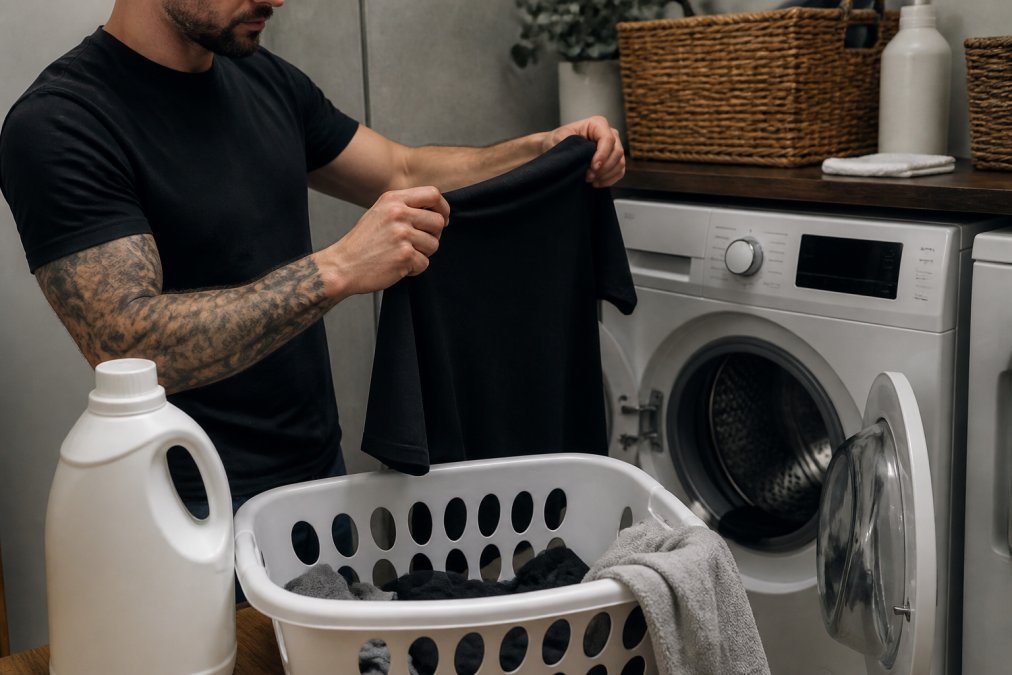
Heat is what breaks down the ink bond. Cold water protects it. Turning the shirt inside out keeps the print from rubbing against other clothes, which causes friction and wear. That's the surface-level version. Here's the version that actually saves prints.
The Mechanism: Why Heat and Friction Kill Ink
Screen print ink is a cured polymer layer sitting on top of the fabric. It has a glass transition temperature, the point where it shifts from flexible to brittle. Hot water and hot dryer air push the ink past that point. Once it goes brittle, every flex of the fabric becomes a micro-crack. Cold water keeps the ink below that threshold, so it stays flexible and moves with the cotton instead of splitting against it.
Friction is the second killer. In a mixed load, the print rubs against zippers, buttons, and heavy seams. That abrasion wears down the ink surface and exposes the edges where cracks start.
Step-by-Step: The Only Wash Routine That Works
- Turn the shirt inside out. Every time. No exceptions.
- Use cold water. Never hot. 30°C is the ceiling, and colder is better.
- Pick a gentle or delicate cycle. High spin speeds stretch the fabric and stress the print.
- Use a mild detergent. Skip bleach and fabric softener.
- Wash with similar colors, not heavy items like jeans or towels.
- Skip the dryer. Hang it up.
Fabric softener coats the fibers and weakens the ink bond. Mineral deposits in hard water can also dull the print over time. If your water is hard, a gentle detergent matters even more. In Norway, water hardness varies by region, if you're on hard water, a liquid detergent formulated for it will keep the print from clouding over.
What Most Guides Get Wrong
Most care guides tell you to wash cold and hang dry, then stop. They don't tell you that the first wash is the most dangerous one. If the print wasn't fully cured at the factory, the first wash is where it fails. That's why you should wash a new graphic tee alone, inside out, on cold, before you wear it into the ground.
Why Do Prints Peel After Washing? The Science of Ink Adhesion
Prints peel when the ink never fully bonded to the fabric in the first place. Cracking and peeling are cousins. Both come back to a weak ink bond.
Best Practices for Drying Graphic Apparel (Dryer Heat Is the Enemy)
Air dry your graphic apparel. The dryer is the single biggest killer of screen prints.
- Hang dry in the shade, not direct sun
- Lay flat for heavyweight tees to hold their shape
- Never dry clean a screen print
- Skip the iron. If you must, iron inside out, never on the print
Visual Identification: Is Your Print Cracking or Peeling?
Cracking and peeling look different once you know what to look for. But the real skill is knowing why they look different, because that tells you whether the shirt is worth saving or already dead.
Here's a quick way to tell them apart:
| Problem | What It Looks Like | Main Cause | Can You Fix It? |
|---|---|---|---|
| Cracking | Fine lines, dried-mud pattern | Thermal stress, fabric flex, age | No, but you can slow it |
| Peeling | Ink lifting in patches | Weak ink adhesion, bad curing | Rarely, small spots only |
| Fading | Print looks washed out | Water-based ink, harsh detergent | No |
| Flaking | Ink coming off in bits | Brittle ink from dryer heat | No |
The Fingernail Test: A 10-Second Diagnosis
Run your fingernail gently across the damaged area. If the ink catches and lifts, it's peeling, the bond is gone. If your nail glides over the cracks without lifting anything, it's cracking, the ink is still attached, just split. This one test tells you whether you're dealing with a care issue or a manufacturing failure.
What Each Failure Mode Tells You
Cracking means the ink did its job but the shirt got stressed. It's a care problem. You can slow it down, but you can't reverse it. The print will keep cracking along the same lines.
Why This Matters Before You Buy
When you're looking at a new shirt, you can't see future cracking. But you can spot the warning signs of a print that will peel. Run your hand over it. If it feels like a raised rubber layer with sharp, clean edges, that's plastisol, durable if cured right, prone to cracking if not. If it feels almost flush with the fabric, that's water-based, softer, but it needs a perfect cure to last.
Repair and Restoration: Can You Fix a Cracked Screen Print?
You can't truly fix a cracked screen print. Once the ink layer splits, it stays split. But you can slow it down and hide minor damage.
A few honest options:
- Fabric marker touch-up. Match the color and fill small cracks. It works for dark prints on light shirts.
- Iron-on patch. Covers a damaged area but changes the look.
- Heat press re-cure. A pro shop can sometimes re-bond a lifting edge. It won't fix cracks.
- Accept it. A worn print tells a story. Some people wear it proud.
Storage and Long-Term Care for Print Longevity
Store graphic tees folded, not hung. Hanging stretches the shoulders and puts stress on the print.
A few storage rules that protect your prints:
- Fold along the sides, not across the graphic
- Keep away from direct sunlight to stop fading
- Don't stack heavy items on top of printed tees
- Rotate your shirts so no single one gets worn to death
What Actually Keeps a Print Alive
The shirts that survive years of wear share the same traits. Heavyweight cotton. A clean, well-cured print. And an owner who washes cold, dries by air, and stores smart.
Frequently Asked Questions
Why is my screen print cracking?
Screen prints crack mainly because the ink layer loses flexibility over time. Heat from tumble drying and high-temperature washing causes the plastisol ink to dry out and become brittle. When the fabric stretches during wear, the brittle ink can't flex with it, so it fractures along stress points. Using too much detergent and hard water also speeds up the breakdown.
How can I fix a cracked screen print?
You can't fully reverse cracking, but you can slow it down. Prevention through cold washing and air drying is far more effective than repair.
How to keep screen printed shirts from cracking?
Wash screen printed shirts inside out in cold water on a gentle cycle. Use a mild detergent and skip fabric softener, which leaves residue that weakens ink adhesion. Never tumble dry on high heat. Hang dry or use the lowest dryer setting. Avoid ironing directly on the print. These habits protect the ink bond and keep the graphic flexible for years.
Does heat cause screen prints to crack?
Yes. Heat is the primary cause of screen print cracking. Tumble drying at high temperatures makes plastisol ink brittle and causes the fabric to shrink, which puts mechanical stress on the print. Even washing at high temperatures breaks down the ink bond over time. Cold wash and air dry is the single most effective way to prevent heat-related cracking.
A cracked print is a dead print. You can't undo it, but you can stop it before it starts. PJR Built Different makes heavyweight graphic tees with high-density prints built to survive the wash, the grind, and the years. Built between the shifts, made for people who refuse shortcuts. Get started with PJR Built Different and wear a print that holds up.
Editorial Team