Journal · 13 Sep 2026
Why Heavyweight Cotton Shirts Last: Fabric Weight Guide

Table of Contents
- The Real Reason Heavyweight Cotton Shirts Outlast Everything Else
- GSM Fabric Weight Explained: What the Numbers Actually Tell You
- Heavyweight vs Lightweight T-Shirts: The Durability Gap
- How to Care for Heavyweight Cotton So It Lasts for Years
- Shrinkage, Shape Retention, and Why Cheap Cotton Fails
- What to Look For When Buying Heavyweight Cotton
- Conclusion
- Frequently Asked Questions
Last Updated: September 13, 2026
The Real Reason Heavyweight Cotton Shirts Outlast Everything Else
Heavyweight cotton is fabric woven from thicker, denser yarns, typically 180 g/m² and up, and that density is the single biggest reason a shirt survives years of wear instead of months. This guide from PJR Built Different breaks down why heavy weight cotton shirts last, what the numbers on the tag actually mean, and how to keep yours in rotation for the long haul.
Most tees fail the same way: they go thin, they sag at the collar, they twist at the hem. Cheap cotton loses that fight because there isn't enough fiber in the fabric to begin with. Heavier cotton starts with more material per square metre, so every wash removes a smaller share of what's there.
Here's the part most guides skip. Weight alone isn't the whole story. A 220 g/m² shirt knit from short, loose fibers can still fall apart faster than a tighter 190 g/m² build. Density, weave, and fiber length decide whether the fabric holds its structure or gives up.
Below, we'll walk through GSM, weave density, shrinkage, and care so you know exactly what you're paying for.
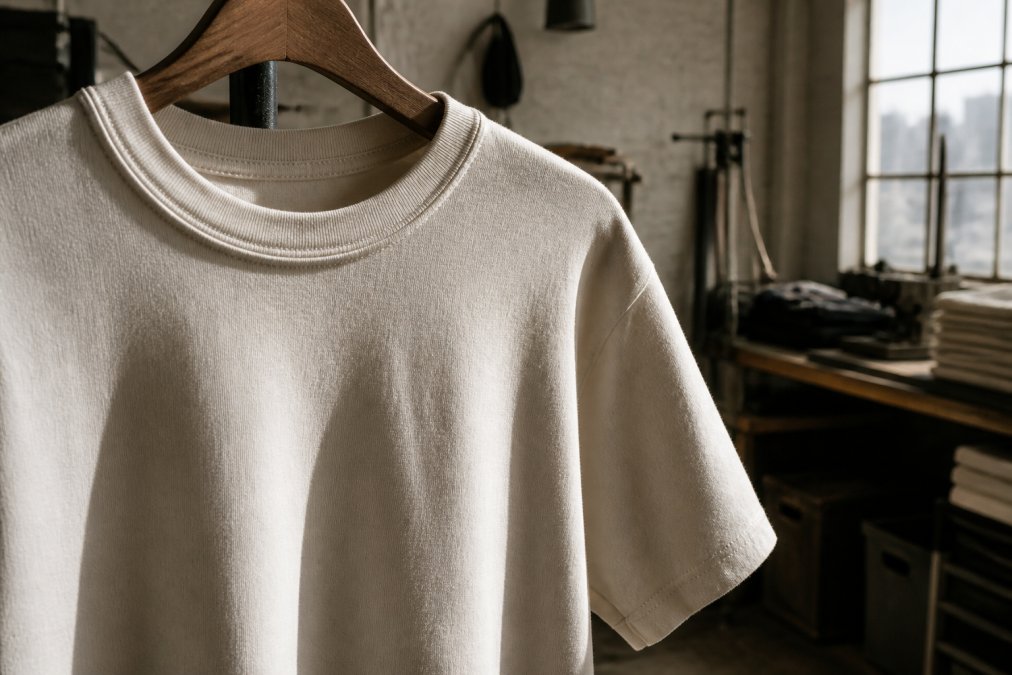
GSM Fabric Weight Explained: What the Numbers Actually Tell You
GSM stands for grams per square metre, a measurement of how much fabric mass sits in one square metre of cloth (iso.org). Higher GSM means a denser, heavier, more substantial fabric.
T-shirt fabric generally lands in these bands:
| GSM Range | Weight Class | Typical Feel | Durability Outlook |
|---|---|---|---|
| 120-150 | Lightweight | Thin, airy | Wears thin quickly |
| 150-180 | Midweight | Standard tee | Moderate lifespan |
| 180-220 | Heavyweight | Substantial, structured | Long-term wear |
| 220+ | Ultra-heavy | Rigid, dense | Years of use |
A 220 g/m² cotton tee carries roughly double the fiber mass of a 120 g/m² one. More fiber means more material to absorb abrasion from washing, wearing, and everyday friction.
Why Weave Density Matters More Than Just the Number
Two shirts can share the same GSM and perform completely differently. Weave density, the tightness of the knit, decides how well the fabric resists stretching and pilling. A denser weave locks fibers in place, so the garment keeps its shape instead of relaxing into a sack after a few wears. Ring-spun and long-staple cottons help here too, because longer fibers twist into stronger yarn with fewer exposed ends to fray.
The ISO 13934-1 standard for textile tensile strength testing describes how fabric tensile strength is measured, which is the property that separates a shirt that holds up from one that tears at the seam.
Heavyweight vs Lightweight T-Shirts: The Durability Gap
The durability gap between heavyweight and lightweight t-shirts comes down to fiber mass per square metre and how that mass resists wear over time. But the real story is in the numbers. A 220 g/m² tee carries roughly 83% more fiber mass than a 120 g/m² one. That's not a small edge, it's the difference between a shirt that survives a year of daily rotation and one that goes translucent by month three.
Here's how the two weight classes actually behave under stress:
| Factor | Lightweight (120-150 g/m²) | Heavyweight (180-220+ g/m²) |
|---|---|---|
| Fiber mass per m² | Baseline | 50-83% more |
| Abrasion resistance | Wears thin at friction points | Takes years to wear through |
| Shape retention | Sags, twists, loses collar | Holds silhouette wash after wash |
| Shrinkage risk | Higher (thinner yarn, looser knit) | Lower (denser weave, often pre-shrunk) |
| Breathability | High, airy | Moderate, depends on weave |
| Drying time | Fast | Slower |
| Typical lifespan (daily wear) | 6-12 months | 2-5 years |
Lightweight cotton is comfortable and cheap to produce. It's also the first thing to go translucent, lose its collar, and stretch out of shape. Heavyweight cotton behaves differently in three ways:
- Shape retention: Denser fabric resists the sag that turns a fitted tee into a loose one. The knit structure locks fibers in place, so the garment keeps its silhouette instead of relaxing into a sack.
- Abrasion resistance: More fiber per square metre means more material to wear through before a hole appears. Underarm friction, shoulder-bag rub, and wash-cycle agitation all take longer to do damage.
- Collar and seam integrity: Heavier fabric supports reinforced construction better. A double-stitched collar on a 220 g/m² tee holds its shape; the same collar on a 140 g/m² tee still warps because the fabric underneath can't carry the load.
But here's the trade-off nobody talks about: heavyweight cotton is warmer and slower to dry. If you run hot or live in a humid climate, a 220 g/m² tee can feel like a sauna. That's why some brands blend in a small percentage of polyester or use open-knit structures to keep breathability up without sacrificing weight. For pure cotton, a 180-200 g/m² range often hits the sweet spot between durability and comfort.
Lightweight still has a place. It breathes more, dries faster, and costs less. For a shirt you wear twice a week for a year, that trade-off rarely pays off. But for a shirt you want to still be wearing in three years, weight class is the first thing to check.
How to Care for Heavyweight Cotton So It Lasts for Years
Proper care for heavyweight cotton comes down to cold water, low heat, and letting the fabric dry without stress. Heavy cotton is tougher than lightweight, but it still answers to how you wash it.
- Wash cold. Hot water accelerates fiber contraction and speeds up shrinkage.
- Turn it inside out. This protects the print and reduces surface friction against other garments.
- Skip the dryer when you can. Hang drying preserves shape and prevents heat-driven shrinkage.
- Wash less often. Spot clean between wears. Every wash cycle removes a little fiber.
- Avoid fabric softener. It coats fibers and reduces the natural hand-feel of dense cotton.
The care label guidance from the Norwegian Consumer Authority sets out how textile care labelling must be presented so you can follow the maker's instructions without guesswork.
A common mistake is treating a heavy tee like a delicate one, over-washing and over-drying until the fabric tightens and the fit changes. Treat it like workwear and it behaves like workwear.
Shrinkage, Shape Retention, and Why Cheap Cotton Fails
Shrinkage happens when cotton fibers contract under heat and moisture, and cheap cotton shrinks more because it isn't pre-shrunk and its fibers are shorter. That's the mechanical reason a budget tee comes out of the wash a size smaller and never quite fits again.
Three factors separate cotton that holds its shape from cotton that doesn't:
- Pre-shrunk finishing. Fabric treated before cutting shrinks far less in the wash.
- Fiber length. Long-staple and ring-spun cotton resist fiber contraction better than short carded cotton.
- Weave density. Tighter knits hold structure, so the garment keeps its silhouette instead of relaxing out.
Cheap cotton fails on all three at once. It's cut from short fibers, woven loosely, and rarely pre-shrunk, so the first hot wash resets the whole garment. Heavyweight cotton built right sidesteps most of that.
What to Look For When Buying Heavyweight Cotton
When you're buying heavyweight cotton, check the GSM, the fiber type, and the construction details before you check the price tag. Those three things decide whether the shirt lasts two years or two months. But there's a fourth factor most guides ignore: how the fabric's structure interacts with your frame.
The technical checklist:
- GSM stated on the label, ideally 180 g/m² or higher. If the brand doesn't publish GSM, that's a red flag. A 220 g/m² tee is roughly 83% heavier than a 120 g/m² one, that's the difference between a shirt that survives daily wear and one that doesn't.
- 100% combed ring-spun cotton for smoother, stronger yarn. Combed cotton has shorter fibers removed, so the yarn is cleaner and less prone to pilling. Ring-spun adds twist, which increases tensile strength.
- Pre-shrunk fabric to limit wash-day surprises. If it's not pre-shrunk, assume 3-5% shrinkage on the first hot wash.
- Reinforced collar and shoulder seams for structural integrity. Look for double-stitched collars and taped shoulder seams, these are the first points of failure on cheap tees.
- Side-seamed construction instead of tubular, for a fit that holds. Tubular tees are cut from a tube of fabric and have no side seams; they twist and lose shape faster.
The body-type angle nobody covers:
Heavyweight cotton doesn't just last longer, it changes how a shirt sits on your frame. The structure and stiffness of 200+ g/m² fabric means it drapes differently than lightweight cotton. Here's what that means in practice:
- For lean or athletic builds: Heavy fabric adds visual bulk. A structured 220 g/m² tee can make shoulders look broader and arms look fuller without feeling tight. The trade-off is that it won't cling to show muscle definition the way a lightweight stretch tee does.
- For bigger or broader frames: The density helps the shirt hold its shape instead of stretching over the chest and belly. Side-seamed, structured cuts hold their silhouette instead of clinging or ballooning. Look for a regular fit with a slightly longer body, heavy fabric doesn't drape as much, so a shorter cut can ride up.
- For anyone in between: The key is the shoulder seam. It should sit at the edge of your shoulder, not hang past it. Heavy fabric won't stretch to compensate for a bad fit, so getting the shoulder right matters more than with lightweight tees.
This is where PJR Built Different does things differently. Our Men's premium heavyweight tee is built from 100% combed ring-spun cotton at 6.5 oz/yd² (220 g/m²), with a structured regular fit, reinforced collar and shoulders, and pre-shrunk fabric. No investors, no shortcuts, just fabric that does the job. If you want the long-sleeve version for cold shifts, the Men's heavyweight long sleeve, No Ordinary runs the same construction.


For a bigger frame, fit consistency matters as much as weight. Side-seamed, structured cuts hold their silhouette instead of clinging or ballooning.
Conclusion
Heavy weight cotton shirts last because density, fiber length, and construction give the fabric something to lose slowly instead of all at once. Cheap cotton has nothing to spare.
If you're tired of replacing tees every few months, PJR Built Different builds heavyweight cotton apparel for people who are hard on their clothes and refuse to take shortcuts. Our premium heavyweight tees use combed ring-spun cotton, reinforced seams, and pre-shrunk fabric, and every piece is forged from two decades of kitchen experience, not a marketing deck.
Get started with PJR Built Different and gear that holds up to the grind. Contact us to find your fit.
Frequently Asked Questions
How long does a heavyweight cotton shirt actually last?
With proper care, a heavyweight cotton shirt can last several years of regular wear. The fabric weight (220 g/m² and above) resists thinning, holds its shape through repeated washing, and handles daily use without developing holes or losing structure. Lightweight shirts (140-160 g/m²) typically show wear within months. The difference comes down to fiber density and how the fabric is constructed. Wash cold and hang dry to maximize lifespan.
Is heavy cotton the same as 100% cotton?
No. Heavy cotton refers to fabric weight, measured in GSM (grams per square meter). A shirt can be 100% cotton but still lightweight if the fabric is thin. Heavyweight cotton is 100% cotton that has been woven or knit at a higher density, usually 180 g/m² or more. The weight comes from more fiber per square meter, not from blending in synthetic materials. Check the GSM spec, not just the fiber content.
Does heavyweight cotton shrink more than lightweight?
Heavyweight cotton can shrink if it is not pre-shrunk, but quality manufacturers pre-shrink the fabric before cutting. Pre-shrunk heavyweight cotton typically shrinks less than 3% after the first wash. Lightweight cotton often shrinks more because it has less structural density to resist fiber contraction. Always check if the shirt is labeled pre-shrunk. Wash cold and hang dry to prevent further shrinkage regardless of fabric weight.
Why do heavyweight cotton shirts hold their shape better?
Shape retention comes from fabric density and weave structure. Heavier cotton has more fibers per square meter, which means the fabric resists stretching at stress points like the shoulders, collar, and hem. The weave density also prevents the fabric from twisting or sagging after washing. Lightweight shirts lose shape because the thinner fabric stretches permanently under tension. Heavyweight cotton bounces back because the fiber structure stays intact.
Editorial Team