Journal · 22 Sep 2026
Why Independent Apparel Lasts Longer

Table of Contents
- Why Independent Apparel Lasts Longer
- How to Identify Quality Clothing Construction
- Heavyweight Cotton Benefits for Garment Longevity
- Material Sourcing and Fabric Integrity
- The Cost-Per-Wear Advantage of Independent Brands
- Garment Longevity Tips for Maximum Lifespan
- Planned Obsolescence vs. Built to Last
- Frequently Asked Questions
Last Updated: September 21, 2026
Why Independent Apparel Lasts Longer
Independent apparel lasts longer because it's built on fundamentally different economics than fast fashion. When a brand isn't answering to investors or quarterly earnings calls, the incentive structure flips. Quality becomes the product, not the obstacle to profit margins.
At PJR Built Different, we've spent two decades in professional kitchens watching what survives daily punishment. It comes down to material sourcing, construction standards, and the fact that independent makers stake their reputation on every piece.
A heavyweight t-shirt at NOK 240.50 lasting three years costs less per day than a fast-fashion alternative replaced four times over. Independent apparel lasts longer because the business model demands it.
How to Identify Quality Clothing Construction
Quality construction is measurable and visible if you know what to look for.
Stitch density and seam strength
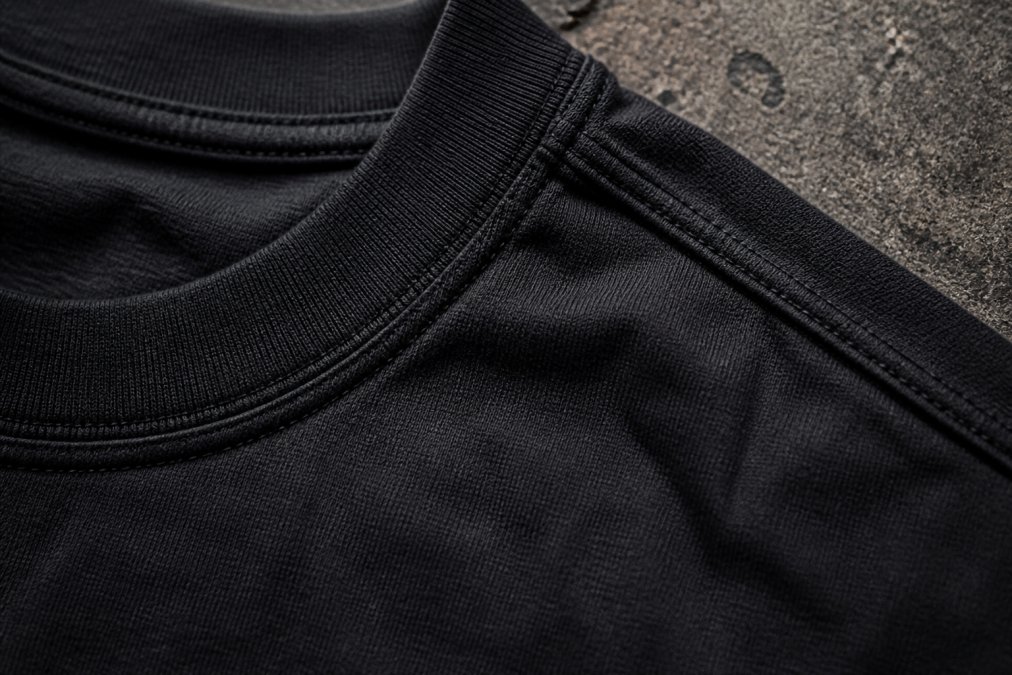
Double-needle stitching on collar, armholes, and hem marks a garment built to last.
Reinforced collar and shoulder seams matter because shoulders take the most abuse. Brands that reinforce there understand garment longevity.
Fabric weight and weave patterns
Fabric weight is measured in ounces per square yard (oz/yd²).
Heavyweight fabric resists pilling, holds shape, and doesn't thin out. Our men's premium heavyweight tee uses 6.5 oz/yd² combed ring-spun cotton, noticeably thicker and built for durability.

Ring-spun cotton creates stronger yarn, resulting in garments that resist degradation and color fade.
Pre-shrunk fabric signals durability: it controls for cotton movement that weakens fibers over time. Independent brands pre-shrink because they're building for long-term wear.
Heavyweight Cotton Benefits for Garment Longevity
Heavyweight cotton is material science applied to durability.
Heavyweight garments use more fiber per square inch for structural integrity.
Heavyweight cotton resists pilling, maintains shape, and absorbs dye evenly because fibers are densely packed. Garment-dyed heavyweight cotton creates more color permanence.
Material Sourcing and Fabric Integrity
Where cotton comes from and how it's processed determines garment longevity. Independent brands control this because they can't hide behind supply chain anonymity.
Understanding fiber length and yarn strength
Combed ring-spun cotton removes short fibers and impurities before spinning, creating yarn with fewer weak points.
GSM and fabric density
Fabric weight in grams per square meter (GSM) is an indicator of durability potential. But GSM alone doesn't tell the full story, density matters equally.
Two fabrics at 220 GSM can perform differently depending on how tightly the fibers are packed. A loosely woven 220 GSM fabric will pill faster and thin out sooner than a tightly woven 220 GSM fabric because loose weaving allows fibers to move and separate during washing.
Dyeing method and fiber penetration
How and when dye is applied affects both color permanence and fiber strength.
Heavyweight combed ring-spun cotton accepts dye more completely because the fibers are longer, cleaner, and more densely packed. The dye molecules have more surface area to bond to, and the tight fiber structure locks the color in place.
Chemical finishing and fiber preservation
Quality independent brands use gentler finishing processes, or none at all, because they're building for durability, not just initial softness. A garment that feels slightly stiffer out of the box but softens naturally through wear will outlast one that's chemically softened and degrades from there. This is a deliberate trade-off: less impressive first impression, longer actual lifespan.
Men's heavyweight t-shirt — Built →
The Cost-Per-Wear Advantage of Independent Brands
Most people calculate clothing cost wrong. They divide the price by one year and conclude that fast fashion is cheaper. The real math works differently.
An independent brand t-shirt at NOK 240.50 worn twice weekly for three years before it's retired costs NOK 240.50 ÷ (2 wears per week × 156 weeks) = NOK 0.77 per wear. Our men's premium heavyweight tee at NOK 240.50 is designed to last.

The independent apparel lasts longer because the economics force it. When you're betting your reputation on every garment, you can't afford to cut corners on material or construction. The margin structure of independent brands requires that quality be real, not marketing.
This compounds when you factor in replacement cycles. Three fast-fashion t-shirts over three years means three shopping trips, three decisions, three moments of waste. One independent t-shirt means consistency, reliability, and one less thing to replace.
Garment Longevity Tips for Maximum Lifespan
How you treat a garment determines whether it reaches its potential lifespan or fails early. Construction and material set the ceiling. Care determines if you hit it.
Washing and care practices
Cold water washing is non-negotiable for color retention and fiber preservation. Heat breaks down cotton fibers and sets in stains. Cold water cleans without the damage. Hang dry instead of machine drying; tumble heat is one of the fastest ways to degrade fabric.
Wash less frequently than you think you need to. A garment worn for eight hours doesn't need washing immediately. Airing it out overnight often removes odor. Washing less frequently means fewer stress cycles on the fabric.
When you do wash, use gentle detergent and don't overload the machine. Crowded washing creates friction that damages fibers. Turn garments inside out to protect graphics and reduce pilling on the surface.
Repair and repairability: The independent advantage
A torn seam or small hole doesn't mean the garment is done. This is where independent apparel reveals its core difference from fast fashion: it's designed to be repaired.
A simple needle-and-thread repair on a small hole extends garment life by years. A reinforced patch on a stress point prevents a small problem from becoming a tear. A re-stitched seam that's coming loose takes 10 minutes and costs nothing. Most people don't repair because they're used to disposable fashion. With garments built to last, repair becomes practical and economical.
Storage and seasonal care
How you store garments between seasons affects their lifespan. Fold rather than hang to prevent shoulder stretching on heavy pieces. Store in a cool, dry place away from direct sunlight, which fades color over time. Use cedar blocks or lavender sachets instead of mothballs, which can damage fibers with harsh chemicals.
Before storing, ensure garments are clean. Sweat and body oils oxidize over time and create permanent stains or weakening in fibers. A quick wash and complete dry before storage prevents this degradation.
Planned Obsolescence vs. Built to Last
Independent apparel lasts longer because the opposite incentive exists. A brand with your name on it survives through reputation. That reputation is built on garments that don't fall apart. Planned obsolescence is a liability, not a feature.
The difference shows up in details. Reinforced stress points instead of thin fabric there. Pre-shrunk material instead of hoping customers accept a smaller fit. Heavyweight construction instead of cutting weight to cut costs. These aren't accidental choices, they're deliberate decisions to build something that survives.
When you buy independent apparel, you're not paying extra for the same product. You're paying for a fundamentally different product: one designed to last, not designed to fail predictably.
Quality apparel that actually survives daily wear is rare because most brands aren't built for longevity. Independent makers like PJR Built Different approach construction differently, using heavyweight ring-spun cotton, double-needle stitching, and reinforced seams because reputation demands it. Our men's premium heavyweight tee at NOK 240.50 uses 6.5 oz/yd² combed ring-spun cotton and pre-shrunk fabric specifically because those details contribute to its durability. Start with garments built to survive, then protect that investment through cold-water washing and hang drying. The cost-per-wear math becomes obvious within months.
Frequently Asked Questions
What makes independent apparel more durable than mass-market clothing?
Independent brands prioritize construction quality over production speed. They use heavier fabrics, reinforce high-stress seams with double-needle stitching, and source premium materials that resist fiber degradation. Mass-market manufacturers cut corners on stitch density and use thinner fabrics to reduce costs. Independent apparel is built for product lifetime, not quick turnover, meaning less planned obsolescence and more actual wear.
How does heavyweight cotton benefit garment longevity?
Heavyweight cotton resists pilling, maintains shape through repeated washing, and has greater tensile strength than standard-weight fabrics. Ring-spun cotton, used in quality independent apparel, creates a smoother, more durable fiber surface. A 220 g/m² heavyweight tee will outlast a 150 g/m² fast-fashion alternative by years because the fabric simply has more substance to withstand daily wear, friction, and laundering cycles.
What should I look for when buying high-quality streetwear?
Check stitch density (tight, even stitching indicates quality control), seam reinforcement (double-needle hems and topstitching), fabric weight (measured in grams per square meter), and material sourcing transparency. Examine collar construction, cuff durability, and whether the brand uses pre-shrunk fabric to prevent shape loss. Independent brands typically provide these details; fast fashion rarely does. The garment should feel substantial in your hands.
How can I extend the lifespan of my streetwear garments?
Wash cold and hang dry to prevent fiber degradation and color fading. Turn graphic prints inside out to protect them from cracking. Avoid over-washing, wear multiple times between washes. Store garments flat or on hangers to prevent stretching. Address small repairs immediately: a loose seam or small hole, fixed early, prevents total garment failure. Quality independent apparel is designed for repair, not replacement, making proper care an investment in years of wear.
Editorial Team