Journal · 06 Sep 2026
How to Maintain Heavy Cotton Hoodies: Care Guide

Table of Contents
- Why Heavyweight Cotton Needs Different Care
- The Best Way to Wash Heavyweight Cotton
- How to Stop Hoodie Collars Stretching
- Preventing Pilling on Cotton Hoodies
- Drying Methods That Preserve Fabric Integrity
- Ironing, Steaming, and Repairing Heavy Cotton
- Seasonal Storage and Water Hardness Impact
- Keep Your Hoodie Built Different
- Frequently Asked Questions
Last Updated: September 6, 2026
Heavy cotton hoodies fail for one reason: they are washed like regular t-shirts. Standard laundry routines strip the structure out of heavyweight fabric, causing shrinkage, pilling, and stretched collars. This care guide from PJR Built Different breaks down the exact process for keeping heavyweight cotton in fighting shape.

Most guides treat hoodie care as an afterthought. We treat it as part of the investment.
Why Heavyweight Cotton Needs Different Care
Heavyweight cotton is a different animal than the thin fabric used in cheap hoodies. The dense weave that gives it structure also makes it more vulnerable to aggressive washing, high heat, and rough handling.
The most common mistake is treating a 400 GSM hoodie the same as a 200 GSM one. Heavyweight cotton absorbs more water, takes longer to dry, and holds onto detergent residue more stubbornly. That residue is what makes fabric stiff and scratchy over time.
The Best Way to Wash Heavyweight Cotton
Wash heavyweight cotton inside out, in cold water, on a gentle cycle, with a mild detergent. Cold water prevents shrinkage and color fading. A gentle cycle reduces the stress that causes pilling and distortion.
Turn the hoodie inside out before every wash to protect the outer surface from friction, the primary cause of pilling. Close zippers and fasten drawstrings to prevent snagging. Separate heavyweight cotton from denim or anything with hooks or rough textures.
Use a wash bag if your machine has an aggressive agitator. It reduces friction while still allowing water and detergent to circulate. This is especially important for hoodies with printed graphics, which crack under rough washing.
Water Temperature and Cycle Settings
Cold water, below 30°C, is non-negotiable. Hot water contracts cotton fibers, causing shrinkage. High spin speeds stretch heavy fabric and damage fibers. Set your machine to a low spin speed, around 600-800 RPM.
How to Stop Hoodie Collars Stretching
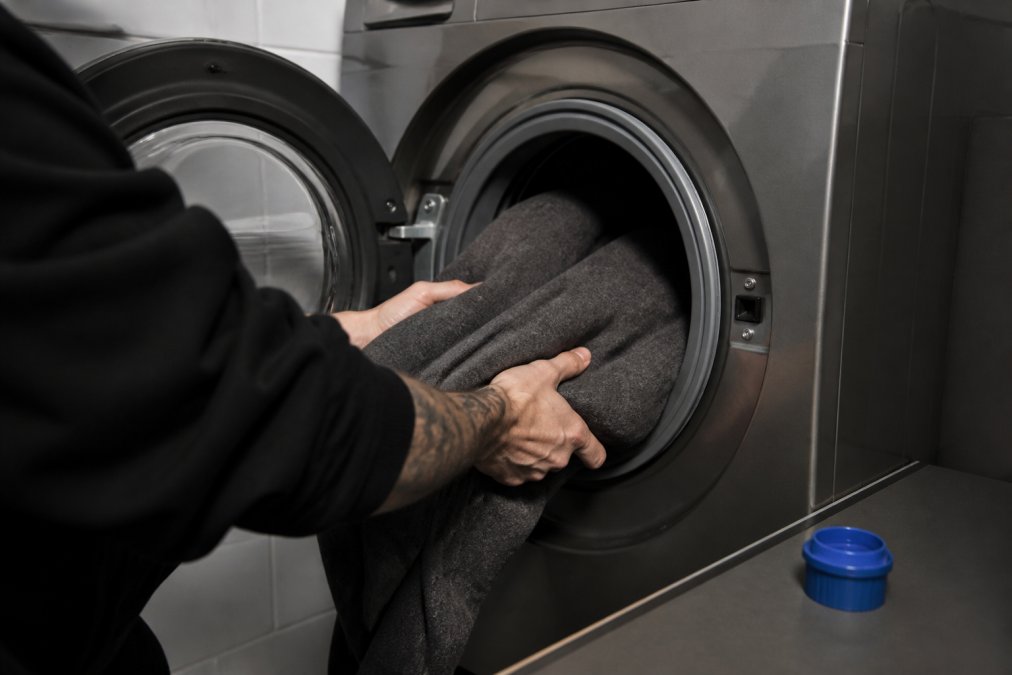
A stretched collar ruins an otherwise perfect hoodie. When you pull a heavy, waterlogged hoodie over your head to remove it, the weight of the wet fabric stretches the neckline permanently. Never remove a wet hoodie by the collar.
Instead, gather the fabric at the shoulders and lift the hoodie off from the bottom. When drying, never hang a heavy hoodie by the collar, gravity will stretch the neckline within hours. Lay it flat or hang it folded over a thick hanger.
Preventing Pilling on Cotton Hoodies
Pilling happens when loose fibers tangle into small balls. Heavyweight cotton is less prone to it than lighter fabrics, but not immune. The main causes are friction, aggressive washing, and low-quality detergent.
Wash inside out to minimize friction. Use liquid detergent instead of powder, which can get trapped in the dense fleece. Skip fabric softener entirely, it coats fibers with a waxy layer that breaks down the cotton structure.
If pilling appears, remove it with a fabric shaver designed for knitwear, using short strokes. Do not pull at the pills with your fingers, which can yank out healthy fibers.
Drying Methods That Preserve Fabric Integrity
Air drying is the only method that fully preserves heavyweight cotton. Tumble dry low is acceptable but risky, the heat and tumbling break down fibers over time.
Lay the hoodie flat on a clean towel or mesh drying rack. Reshape it while still damp, smoothing wrinkles and realigning the collar and cuffs. Once the cotton sets as it dries, you cannot easily fix misshapen areas.
If you use a dryer, set it to the lowest heat and remove the hoodie while still slightly damp. Let it finish drying flat.
Ironing, Steaming, and Repairing Heavy Cotton
Most care guides stop at the wash cycle, leaving you to handle deep wrinkles and small damage. Heavyweight cotton is dense, so it needs a different approach than a thin t-shirt.
The Right Way to Iron a Heavy Hoodie
Ironing heavy cotton is about using heat and moisture to relax fibers, not brute force. Set your iron to the highest cotton setting with a full water tank. Never iron a dry hoodie, you risk scorching the outer layer before the heat penetrates.
Lay the hoodie flat on the ironing board. Start with the hood, misting it lightly with water and pressing firmly in small sections. For the body, iron the inside first to avoid putting direct heat on the outer surface, which can cause a shine. Then do a final pass on the outside with a pressing cloth between the iron and the fabric.
The collar and cuffs are usually ribbed and shrink or warp differently than the main body. Stretch them gently while still hot and damp, then let them cool flat to reset the elastic.
Steaming for a Quick Refresh
Steam is the better option when you don't need a sharp crease, just want to kill wrinkles and odors between washes. Hang the hoodie on a sturdy hanger and run a handheld steamer from the bottom hem up, keeping the nozzle about 5 centimeters from the fabric. Move slowly so moisture penetrates the dense weave.
For tough wrinkles, pull the fabric taut with one hand while steaming with the other. After steaming, let the hoodie hang for a few minutes to dry completely. Steaming also removes the musty smell that settles into heavy fleece that wasn't dried properly.
Repairing Damage Before It Spreads
Heavy cotton is durable, but not indestructible. The most common failures are frayed drawstrings, loose cuffs, and small snags. Each needs a different fix.
Frayed drawstrings: Cut off the frayed end with sharp scissors, then apply clear nail polish or fabric glue to the new tip to seal the fibers. For a permanent fix, replace the drawstring entirely: attach a safety pin to the new string and thread it through the hood channel. Metal aglets last longer and don't fray as easily.
Loose cuffs and waistbands: If the cuff is loose but not damaged, shrink it back with steam, hold it over a boiling kettle or use a steamer, then stretch it gently back into shape while hot. If the ribbing is separating from the sleeve, turn the hoodie inside out and sew a tight zigzag stitch along the seam where the cuff meets the sleeve.
Snags and small holes: A snag is a pulled loop, not a hole. Do not pull it, use a crochet hook or needle to gently pull the loop back to the inside. If a hole has formed, patch it from the inside with a piece of cotton fabric slightly larger than the hole, bonded with iron-on adhesive. For a durable fix, sew the patch with a whip stitch around the edges.
Heavy cotton rewards attention to detail. Iron it with steam, not pressure. Repair it when the damage is small, not after it spreads. This is the difference between a hoodie that looks worn-in and one that looks worn out.
Seasonal Storage and Water Hardness Impact
Two factors silently degrade heavy cotton hoodies long after the wash cycle ends: how you store them for months and the water you use to clean them.
The Summer Storage Protocol
Heavy hoodies are cold-weather gear. When the season ends, most people shove them in a closet and forget about them. That's a mistake, heavy cotton is a magnet for moisture and a breeding ground for moths. The right storage protocol takes 10 minutes.
Step 1: Wash and dry completely. Never store a hoodie that isn't perfectly clean and bone-dry. Any residual sweat or oil invites moths and mildew. Wash it, then air dry for a full 24 hours. A hoodie that feels slightly damp will develop mildew within weeks.
Step 2: Choose the right container. Plastic bins and vacuum-sealed bags trap moisture and provide no air circulation, causing a musty smell no amount of washing can remove. Use a breathable cotton storage bag or a cardboard box with holes punched in the sides.
Step 3: Fold, don't hang. Hanging a heavy hoodie for months will stretch the shoulders under its own weight. Fold it along the natural crease lines and stack flat, heaviest at the bottom. Do not overstuff, compressed cotton loses its loft.
Step 4: Add natural deterrents. Cedar blocks release an oil that repels moths without the chemical smell of naphthalene. Place two or three in the container. Lavender sachets work as a secondary deterrent. Replace the cedar every six months as the oil evaporates.
Step 5: Check mid-season. Once a month, open the container and check for moisture or insect activity. If you notice dampness, air the hoodies for a day and add more cedar. This 30-second check prevents mildew and moth damage.
How Water Hardness Ruins Heavy Cotton
Water hardness is the hidden variable in every wash. Hard water contains high levels of dissolved calcium and magnesium, which bind to cotton fibers. The result is fabric that feels stiff and less absorbent, even with the best detergent. Over time, mineral buildup weakens the fibers.
The effect is worse on heavy cotton, the dense weave traps more mineral deposits, and the stiffness creeps in gradually. You just notice it feels less soft than when you bought it.
How to tell if you have hard water: Check with your local water supplier or use a test strip. If you see white scale on your faucets or your soap doesn't lather well, you likely have hard water.
The fix is a water softener. The most effective solution is a whole-house water softener. If that's not an option, add a water softening agent to each wash cycle. These products bind to calcium and magnesium ions and prevent them from depositing on the fabric.
Alternative: adjust your detergent. Some detergents are formulated for hard water, containing chelating agents that neutralize minerals. Look for a "hard water formula" label. You may need slightly more detergent, as minerals consume some cleaning agents.
A final rinse trick: Run an extra rinse cycle to flush out mineral-laden water before it dries into the fabric. It's not as effective as a water softener, but it reduces buildup.
Address both, and your hoodie will come out of storage next fall feeling as soft and structured as the day you bought it.
Keep Your Hoodie Built Different
Maintaining heavyweight cotton is not complicated, but it requires discipline. Wash cold, dry flat, skip the fabric softener, and store it properly. These habits separate people who wear a hoodie for a season from people who keep the same piece for years.
At PJR Built Different, we design our hoodies for the grind, with heavyweight construction that stands up to daily wear. Our garment care research from the American Cleaning Institute supports what we have learned in over 20 years of professional kitchens: cotton that is washed correctly outlasts cotton that is washed hard. The textile maintenance guidelines from Cotton Incorporated confirm that cold water and air drying extend fabric lifespan significantly.

The University of California's textile care study found that washing in cold water and air drying reduces shrinkage and maintains fabric strength better than any other method. Apply these principles to your own gear and you will see the difference within a few washes. Your hoodie will keep its shape, its color, and its structure long after others have given up.
Heavy cotton hoodies demand respect. Treat them right and they will carry you through years of work, training, and everything in between. The PJR Built Different collection is built on this principle: no shortcuts, no compromises, just durable construction that holds up. Get started with PJR Built Different and feel what a hoodie is supposed to feel like. Contact us to find your fit.
Frequently Asked Questions
Should you dry a 100% cotton hoodie in a machine dryer?
Air drying is the safest way to maintain heavy cotton hoodies because it prevents shrinkage and preserves fabric structure. If you must use a dryer, set it to tumble dry low and remove the hoodie while it is still slightly damp. High heat breaks down cotton fibers, causing the garment to lose its heavyweight feel and shape over time.
Does fabric softener damage heavy cotton fibers?
Yes. Fabric softener coats cotton fibers with a chemical residue that breaks down the natural structure over time. This residue also reduces the fabric's moisture wicking ability and makes pilling worse.
How do you prevent heavy cotton hoodies from losing their shape?
Wash your hoodie inside out in cold water on a gentle cycle to protect the fibers and the outer surface. Never wring out the fabric; press the water out gently instead. When drying, lay the hoodie flat on a clean towel to maintain its structure. The hood area and collar stay intact when you avoid hanging a wet heavy hoodie, which stretches the fabric under its own weight.
How to remove pilling from premium cotton hoodies?
Use a fabric shaver or a sweater stone to remove pills from the surface of your cotton hoodie. Work gently over the affected areas while the garment lies flat. Wash the hoodie inside out before shaving so the surface is clean. To prevent pilling in the first place, wash heavyweight cotton with smooth fabrics only, never with items that have zippers or rough hardware.
Editorial Team