Journal · 05 Sep 2026
How To Prevent Streetwear Hoodies From Shrinking

Table of Contents
- Why Heavyweight Hoodies Shrink in the Wash
- The Best Way To Wash Heavyweight Cotton Hoodies
- Air Drying vs Machine Drying Streetwear: The Real Difference
- How To Stop Hoodie Collars Stretching Out of Shape
- Emergency Recovery: Reshaping a Shrunken Hoodie
- Hardware Protection: Drawstrings, Zippers, and Prints
- Final Word: Build a Care Routine That Matches the Grind
- Frequently Asked Questions
Last Updated: September 5, 2026
Premium cotton doesn't shrink by accident. It shrinks because heat and agitation force the natural fibers to contract, and most people wreck their gear long before they ever learn how to prevent streetwear hoodies from shrinking the right way. The fix isn't complicated, but it requires discipline. At PJR Built Different, we've spent over two decades in professional kitchens, where our clothes took a beating daily, and we learned exactly what breaks fabric down and what keeps it alive. This guide cuts through the generic laundry advice and gives you the real process for keeping heavyweight cotton in its original shape.
Most guides tell you to wash in cold water and move on. That's barely half the story. The real enemy is a combination of high heat, excessive spinning, and the wrong drying method, which together cause fiber breakdown and permanent distortion. Below, we'll show you exactly how to wash, dry, and store your hoodies so they hold their structure through years of wear.
Why Heavyweight Hoodies Shrink in the Wash
Fabric shrinkage happens when heat and moisture cause natural fibers like cotton to swell and then contract as they dry. This is thermal contraction at work, and it hits 100% cotton and heavyweight fabrics hardest because those fibers absorb more water. Synthetic blends resist this process far better, which is why many streetwear brands mix in polyester.
The washing machine accelerates this through two forces: high water temperature opens up the fiber structure, and aggressive spin speeds force the fibers to tangle tighter together. A common mistake is assuming the dryer is the only culprit. In reality, a hot wash cycle alone can cause measurable shrinkage before the garment ever touches heat.
The fix starts with understanding moisture retention. Cotton holds water deep within its fibers, so the longer it sits wet and hot, the more it contracts. That's why wash cycle length and temperature matter as much as your drying setup.
The Best Way To Wash Heavyweight Cotton Hoodies
The best way to wash heavyweight cotton hoodies is to turn them inside out, use cold water, and select a gentle cycle with a low spin speed. This single routine protects the outer fabric, preserves prints, and minimizes the agitation that leads to fiber breakdown.
Cold water wash is non-negotiable for anything you want to keep. Temperatures above 40°C start the contraction process that leads to permanent damage (peer-reviewed research). Pair that with a mild detergent free of harsh optical brighteners, which can weaken cotton fibers over time.
Here's the step-by-step process:
- Turn the hoodie inside out to protect the outer surface and any graphics.
- Zip up zippers and tie drawstrings to prevent snagging and hardware damage.
- Place it in a mesh laundry bag for extra protection against friction.
- Select a gentle or delicate cycle with cold water, max 30°C.
- Choose the lowest spin speed available to reduce moisture retention and fiber stress.
- Remove the hoodie immediately after the cycle ends, and never let it sit wet in the machine.
Using a mesh laundry bag is the single best investment you can make for garment longevity. It prevents the hoodie from rubbing against other clothes and the drum walls, which causes pilling and weakens the fabric weave.
Air Drying vs Machine Drying Streetwear: The Real Difference
Air drying is the only method that fully protects heavyweight streetwear from heat damage, while machine drying, even on low heat, carries measurable risk of shrinkage (guidance from the Norwegian Directorate of Health). This is where most people lose their gear, because tumble dry low still exposes the fabric to sustained heat that causes contraction over multiple cycles.
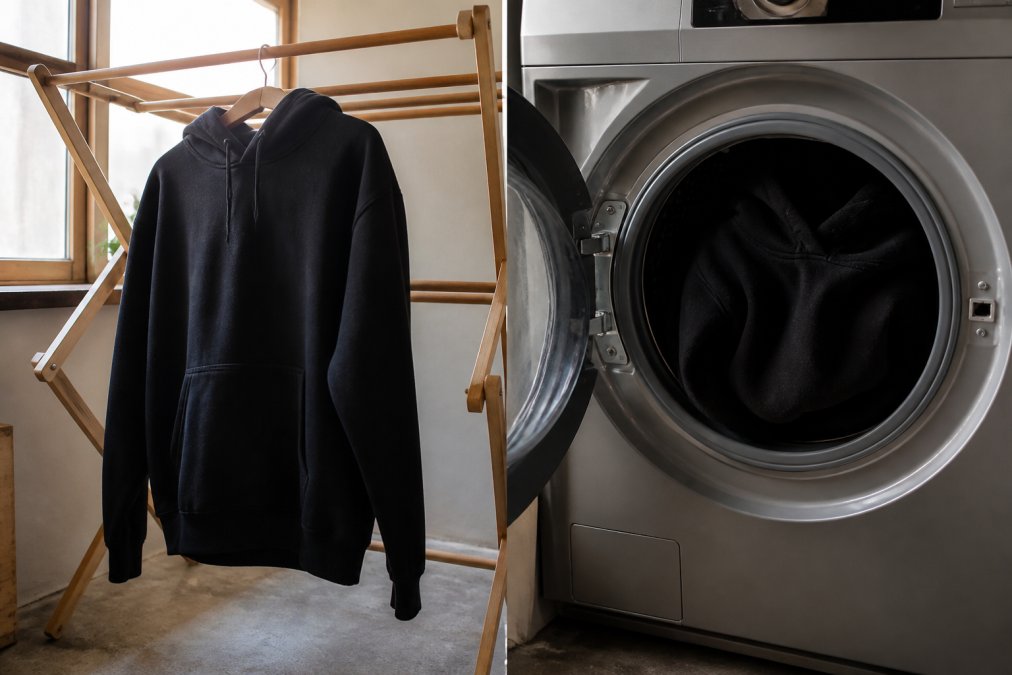
Air drying streetwear requires the right setup. Lay the hoodie flat on a drying rack rather than hanging it, because the weight of water will stretch the shoulders and body when suspended from a hanger. Reshape the damp garment gently with your hands, pulling the seams back to their original alignment before leaving it to dry.
Machine drying is acceptable in one narrow scenario: if the hoodie is a synthetic blend with minimal cotton content. For 100% cotton or heavyweight fleece, the dryer is a gamble you don't need to take. The difference between a hoodie that lasts three years and one that looks distorted after three months often comes down to this single choice.
| Drying Method | Shrinkage Risk | Shape Retention | Best For |
|---|---|---|---|
| Air dry flat | Minimal | Excellent | 100% cotton, heavyweight fleece |
| Hang dry | Low | Moderate | Synthetic blends, quick-dry fabrics |
| Tumble dry low | Moderate to high | Poor over time | Only shrink-resistant blends |
How To Stop Hoodie Collars Stretching Out of Shape
Stretched collars happen from hanging a wet hoodie by the neckline, not from washing itself. The weight of water pulls the ribbed collar fabric downward, permanently distorting the knit structure. This is the fastest way to ruin the look of an otherwise solid hoodie.
To stop hoodie collars stretching, always lay the garment flat to dry or use a wide hanger that supports the shoulders. Never drape a wet hoodie over a thin hanger hook. The ribbed collar cotton absorbs significant moisture, and that extra weight multiplies the stretch force on the neckline.
If a collar has already lost its shape, you can recover it while damp. Re-wet the collar area with cold water, gently massage the ribbing back together with your fingers, and lay the hoodie flat with the collar compressed to its original width. Place a light object on top to hold the shape while it dries completely.
For storage, fold hoodies rather than hanging them long-term. A hanger creates pressure points at the shoulders and stretches the collar over time, even when the garment is completely dry.
Emergency Recovery: Reshaping a Shrunken Hoodie
A shrunken hoodie isn't automatically ruined. If the shrinkage is moderate, you can often reverse it by re-wetting the fabric and stretching it back to size while damp. This works best on 100% cotton, which retains some flexibility in its fiber structure.
Here's the recovery process:
- Fill a sink or basin with lukewarm water and add a capful of baby shampoo or mild hair conditioner.
- Submerge the hoodie for 15 to 20 minutes to relax the cotton fibers.
- Drain the water and gently squeeze out excess moisture without wringing or twisting.
- Lay the hoodie flat on a clean towel and roll it up to remove remaining water.
- Unroll and place the hoodie on a dry towel, then gently pull the fabric back to its original dimensions, working from the center outward.
- Let it air dry completely while pinned or weighted at the edges to hold the stretched shape.
The key is patience. Rushing the stretching process while the fabric is too dry will tear the fibers. Work slowly, in small increments, and re-wet the fabric if it starts to resist. Fabric-specific care instructions matter here, because heavyweight cotton responds differently than lighter jersey knits.
Hardware Protection: Drawstrings, Zippers, and Prints
Hardware and prints fail before the fabric does, and protecting them is part of any complete care routine. Drawstrings, zippers, and printed graphics each need specific handling to survive repeated washes.
Zipper protection starts before the wash cycle. Always zip the hoodie fully closed before washing, which prevents the metal teeth from catching on other garments and ripping the fabric. A mesh laundry bag adds another layer of defense against zipper snagging.
Drawstrings need the same attention. Tie them loosely in a knot or use the hoodie's own grommets to secure them, preventing them from pulling through the channel during the wash. A drawstring that slips inside the hood is one of the most annoying failures, and it's completely avoidable.
Prints and graphics are the most vulnerable element. Direct-to-fabric printing holds up better than traditional screen printing because the ink bonds with the fibers rather than sitting on top. But even the best print will crack if you machine dry it on high heat. Turn the hoodie inside out, wash cold, and air dry to protect the graphic from both friction and thermal stress.
Final Word: Build a Care Routine That Matches the Grind
Caring for premium streetwear isn't about being precious with your clothes. It's about respecting the work that went into making them. The same discipline that keeps you showing up daily should apply to how you treat your gear.
Cold water, gentle cycles, and air drying are not complicated. They're just consistent. The people who get years out of a heavyweight hoodie aren't doing anything mysterious, they're simply refusing to take shortcuts with heat and agitation. That mindset aligns with everything PJR Built Different stands for: no shortcuts, no cutting corners, just durable construction that holds up when you demand more from it. Our Oversized Cotton Hoodie and Premium Fleece Hoodie are built with heavyweight fabric that resists shrinkage when you follow the process above. The Short-Sleeve T-Shirt uses thick cotton with high stitch density for the same reason. These pieces are designed for the long haul, and proper care ensures they deliver.


Build the routine once and it becomes automatic. Your hoodie will keep its shape, its color, and its presence, wash after wash. That's what built different looks like in practice.
Premium streetwear demands respect, and that respect starts with how you wash and dry it. Heat and agitation are the enemies, cold water and air are your tools. PJR Built Different builds heavyweight garments meant to endure the grind, and with the right care routine, they'll hold their shape through a full year of daily wear and beyond. Get started with PJR Built Different and treat your gear the way it deserves. Contact us with any questions about your order or care routine.
Frequently Asked Questions
How do I stop my hoodie from shrinking in the first place?
Stop hoodie shrinkage before it starts by washing in cold water on a gentle cycle and never using a machine dryer. Heat is what causes fabric shrinkage in cotton. Air drying on a flat rack preserves the garment's structure. Turn the hoodie inside out to protect the outer fibers and any prints. This routine is the best way to wash heavyweight cotton hoodies if you want them to keep their original fit.
Is air drying the only way to prevent hoodie shrinkage?
Air drying is the most reliable method, but not the only one. If you must use a dryer, choose the lowest heat setting, remove the hoodie while it is still slightly damp, and lay it flat to finish drying. The heat damage from high temperatures causes fiber breakdown and contraction. For heavyweight cotton, air drying on a rack remains the safest way to prevent hoodie shrinkage and maintain garment longevity.
Can you reverse shrinkage in a cotton-blend hoodie?
You can partially reverse shrinkage in a cotton-blend hoodie. Soak the damp garment in lukewarm water with a small amount of mild detergent for 30 minutes. Gently stretch it back to its original dimensions while wet, then lay it flat to dry. This works best with a damp garment because moisture relaxes the fibers. Pure cotton responds better than synthetic blends, so act fast before the fibers fully set.
Does cold water washing actually stop fabric contraction?
Cold water washing significantly reduces fabric contraction because heat triggers thermal expansion and relaxation in cotton fibers, which causes them to tighten as they cool. Cold water keeps the fibers stable. The spin speed also matters. Use a low spin speed to minimize stress on the wet fabric. Combined with air drying, cold water is your strongest defense against shrinkage.
Editorial Team