Journal · 11 Sep 2026
How to Stop Cotton Hoodies From Shrinking: 2026 Guide

Table of Contents
- Why Cotton Hoodies Shrink: Fiber Stress and Heat Exposure
- What You'll Need Before You Wash
- Step 1: Wash Cold to Stop Cotton Hoodies Shrinking
- Step 2: The Best Way to Wash Premium Cotton Hoodies
- Step 3: Air Drying vs Machine Drying Hoodies
- How to Stop Hoodie Collars Stretching
- Common Mistakes That Shrink Your Hoodie
- Frequently Asked Questions
Last Updated: September 11, 2026
Why Cotton Hoodies Shrink: Fiber Stress and Heat Exposure
Cotton shrinkage is fiber stress: heat and agitation make cotton's natural fibers contract and tighten, permanently reducing garment dimensions. Every wash stresses the fibers; every hot dryer cycle locks it in.
Here's what most guides skip: cotton fibers are held under tension during manufacturing, and heat releases that tension. The fibers relax, pull together, and your regular-fit hoodie comes out cut for someone else. That's why how to stop cotton hoodies from shrinking comes down to two variables: water temperature and dryer heat.
At PJR Built Different, we've spent over two decades in professional kitchens, where a hoodie gets worn hard through a twelve-hour service and still has to hold its shape.

The good news: shrinkage is almost entirely preventable. It comes down to how you wash, how you dry, and a few habits most people never learn.
What You'll Need Before You Wash
Get the basics right before the hoodie hits the water:
- A gentle detergent, ideally a liquid formulated for natural fibers
- A front-loading washing machine, or a top-loader set to its most delicate cycle
- A drying rack or a flat drying surface
- A mesh laundry bag if the hoodie has a zipper or hardware
- Your hoodie's care label, read before anything else
That last item matters most. Care labels are fabric-specific: a 100% cotton hoodie needs different handling than a 50/50 cotton-poly blend. Polyester resists shrinkage better because it doesn't contract like cotton, so pure, non-pre-shrunk cotton needs the most care.
Step 1: Wash Cold to Stop Cotton Hoodies Shrinking
Cold water is the most effective single step in how to stop cotton hoodies from shrinking. Heat drives shrinkage, so removing heat from the wash removes most of the risk. Set your machine to 30°C or lower, choose a delicate cycle, and let the detergent work (information on energy-efficient washing machines).
Turn the hoodie inside out before it goes in. This protects the outer surface from friction, keeps prints from cracking, and reduces fiber abrasion. Use a low spin cycle too; high-speed spinning twists wet cotton, and that stress shows up as distortion once it dries.
A common mistake is overloading the machine. A hoodie needs room to move without being crushed. Wash it with a few similar items, not a full drum.
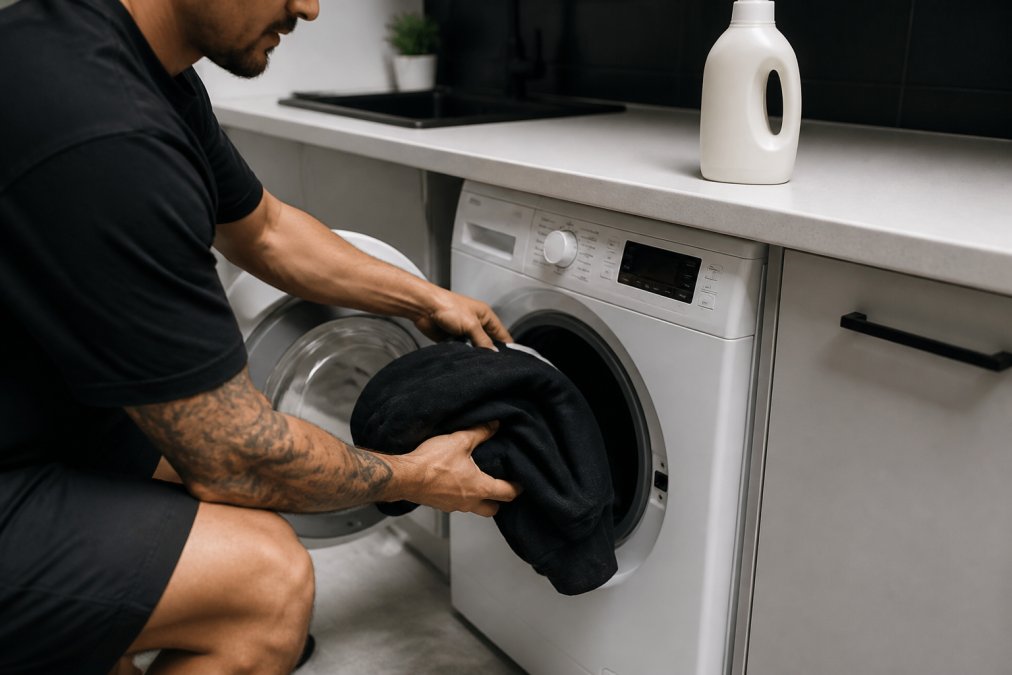
Step 2: The Best Way to Wash Premium Cotton Hoodies
The best way to wash premium cotton hoodies is to treat them like the investment they are: cold water, gentle detergent, inside out, low spin, and never more often than necessary. Premium cotton has a tighter weave and better fiber quality, so it responds more dramatically to heat. Cheap cotton shrinks too, good cotton just shrinks well.
Wash your hoodie only when it actually needs it. Spot-clean small marks instead of running a full cycle, and use the minimum gentle detergent; excess soap leaves residue that stiffens fibers and dulls hand feel.
Water hardness matters, and most guides ignore it. Hard water leaves mineral deposits in cotton fibers, making them stiff and accelerating wear. If your water is hard, a softener or hard-water detergent keeps fibers healthier over repeated washes.
Step 3: Air Drying vs Machine Drying Hoodies
Air drying is the safest way to dry a cotton hoodie; machine drying on any heat setting is the fastest way to shrink it. What most guides skip is what actually decides whether your hoodie keeps its shape: how you air dry it.
Here is the comparison that matters:
| Drying Method | Shrinkage Risk | Best For | Time |
|---|---|---|---|
| Air dry, flat on a rack | Lowest | Preserving fit and shape | 6-12 hours |
| Air dry, flat on a mesh rack | Lowest | Heavyweight fleece, thick cotton | 8-14 hours |
| Air dry, hang on a hanger | Low to moderate | Lightweight blends only | 4-8 hours |
| Tumble dry low | Moderate | When you're in a hurry | 30-40 minutes |
| Tumble dry high | Highest | Never for cotton hoodies | 20-30 minutes |
Flat rack vs. hanger vs. mesh: the real difference
A wet cotton hoodie is heavy. A heavyweight fleece can hold a litre or more of water after a low-spin cycle. Hang that from a hanger and gravity pulls the shoulders into two pointed peaks that never fully relax back. That's where "shoulder bumps" come from, once the fibers dry in that position, the shape is locked in.
- Flat drying rack: The hoodie lies horizontally, weight distributed across the whole panel. No shoulder distortion, no hem stretch. The default for any 100% cotton or heavyweight fleece hoodie.
- Mesh drying rack: Same principle, but air moves through the mesh from underneath, so it dries faster. The better call for thick brushed fleece that holds water.
- Hanger: Only safe for lightweight cotton-poly blends that shed water fast. Never on a soaking wet heavyweight hoodie. If you must hang, hang by the body, not the hood or collar, and reshape the shoulders by hand first.
- Over-the-door or clip hangers: Avoid entirely. The clip points leave marks and the vertical load stretches the hem.
The mechanics nobody explains
Cotton fibers are weakest when wet. Water breaks the hydrogen bonds that hold the fiber structure rigid, so a wet hoodie stretches under its own weight far more easily than a dry one (research on textile properties). Flat drying removes gravity from the equation, the garment dries in the position you laid it out in.

Two habits make flat drying work harder:
- Reshape while damp. Smooth the shoulders, straighten the hem, and pull the cuffs back into shape before you lay it down. Cotton dries in whatever position it's in, so set the position correctly.
- Flip it once. After 3-4 hours, turn the hoodie over so the underside dries evenly. This cuts drying time and prevents one side from staying damp and musty.
Avoid direct sunlight and radiators. Both apply concentrated heat that mimics a hot dryer, just more slowly. A shaded, well-ventilated room is ideal.
How to Stop Hoodie Collars Stretching
A stretched hoodie collar is a different problem from shrinkage and needs a different fix. Collars stretch when the garment is pulled over the head repeatedly, hung by the hood, or dried on a hanger while soaking wet. The ribbed knit loses its memory and stays stretched.
To prevent it: never hang a wet hoodie by its hood or collar, support the body instead. When you pull it on, grip the base of the collar, not the top edge. Wash on the gentlest cycle and never wring the neckline by hand.
If a collar has already stretched, a short soak in cool water followed by flat drying can help the ribbing recover some shape. It won't fully restore a badly stretched collar, which is why prevention matters more than repair.
The rescue workflow: what to do when the damage is already done
Most guides blur prevention and repair into one list, which is why people end up confused about a hoodie that has already shrunk. Separate the two: prevention is before the wash, rescue is after the damage.
Step 1: Confirm it is actually shrinkage, not just a tight fit. Lay the hoodie flat and measure pit-to-pit and collar-to-hem against the size chart. Within a centimetre or two, it hasn't shrunk, it just fits differently than you expected. Rescue only works on genuine fiber contraction.
Step 2: Soak in cool water with a gentle detergent. Fill a basin with cool water (20°C or below), add a small amount of gentle liquid detergent, and soak the hoodie 15-30 minutes. This relaxes the fibers and makes them pliable again. Do not use hot water, it locks the shrinkage in further.
Step 3: Gently stretch while wet. With the hoodie still wet, lay it flat on a towel and pull it back toward its original dimensions, section by section: shoulders, chest, hem, sleeves. Use even pressure, not force. Wet cotton fibers will move, but they'll also tear if you yank.
Step 4: Pin and dry flat. Pin the stretched hoodie to a flat rack or towel with rust-proof pins at the shoulders, hem, and cuffs. This holds the new dimensions while the fibers dry. Air dry completely, away from direct heat.
Step 5: Repeat if needed. One cycle usually recovers a partial size; a hoodie that shrank a full size may need two or three. Each one relaxes the fibers a little more.
What does not work
- Boiling water: A myth. Hot water causes shrinkage, it does not reverse it.
- Fabric softener: Makes fibers feel softer but does not restore dimensions. Overuse coats the fibers and reduces their ability to recover.
- Hair conditioner: Sometimes recommended online, but it leaves residue that stiffens cotton over time.
- Stretching dry: Cotton fibers do not move when dry. You will stretch the seams, not the fabric.
Reading the care label like a pro
Most people glance at the care label and move on. Read it properly. The symbols tell you what the fabric can take:
- Washtub with a number: The number is the maximum water temperature in Celsius. A 30 means 30°C, not 30°F. A washtub with a hand in it means hand wash only.
- Triangle: Bleach. An empty triangle means bleach is allowed. A crossed-out triangle means no bleach. A triangle with two diagonal lines means oxygen bleach only.
- Square with a circle: Tumble dry. One dot means low heat, two means medium, three means high. A crossed-out symbol means do not tumble dry.
- Iron symbol: Dots indicate temperature. One dot is low, two is medium, three is high. A crossed-out iron means do not iron.
A 100% cotton hoodie with a crossed-out tumble dry symbol is telling you exactly what this article has been saying: air dry it flat. A 50/50 blend with a low-heat tumble dry symbol gives you more room. Read the label before you wash, not after.
Common Mistakes That Shrink Your Hoodie
Most shrinkage comes from a short list of repeat offenses. Avoid these and your hoodie holds its size for years:
- Washing in warm or hot water "just this once"
- Tumble drying on high heat to save time
- Using too much detergent, which leaves residue that stiffens fibers
- Overloading the washing machine and crushing the garment
- Hanging a wet hoodie by the hood or shoulders
- Ignoring the care label because "cotton is cotton"
- Washing after every single wear when a spot clean would do
The throughline is heat and stress. Cotton doesn't shrink because it's weak; it shrinks because heat and agitation force the fibers to contract. Remove those two forces and the garment holds.
For a hoodie built to take this kind of care and keep its shape, the PJR Built Different heavyweight hoodie uses a 50/50 cotton-poly blend that resists shrinkage better than pure cotton, with a double-lined hood and ribbed cuffs that hold their structure. The premium fleece hoodie leans heavier on cotton at 80/20, with a brushed interior and relaxed fit. Both are built for the grind, not the landfill.
Cotton hoodies shrink for one reason: heat and stress on the fibers. Control the water temperature, skip the hot dryer, and treat the garment like something worth keeping, you keep the fit you paid for. That's the whole game.
At PJR Built Different, we build hoodies for people who work hard and expect their gear to keep up. Our heavyweight and premium fleece hoodies are made to be worn through long shifts, washed properly, and worn again. If you want apparel that holds its shape as long as you hold your standards, reach out to us and see what built different actually means.
Frequently Asked Questions
Will a 100% cotton hoodie shrink?
Yes, if you wash it hot or tumble dry it on high heat. Cotton fibers contract when exposed to heat and agitation, so a 100% cotton hoodie can lose noticeable size after one bad wash. Cold water and air drying prevent that. A pre-shrunk 100% cotton hoodie like the PJR oversized faded tee holds its cut far better because the fabric was treated before it was sewn.
Does cold water washing prevent hoodie shrinkage?
Cold water is the single biggest factor in stopping shrinkage. Heat causes cotton fibers to contract and tighten, so washing at 30°C or lower keeps the fabric relaxed. Pair a cold wash cycle with a low spin speed and air drying, and your hoodie will hold its garment dimensions through repeated washes without losing shape or feel.
Will 80% cotton and 20% polyester shrink?
Less than pure cotton, but it can still shrink slightly. The polyester adds stability to the fabric blend, which reduces how much the cotton fibers can contract. A blend hoodie like the PJR premium fleece hoodie (80/20) handles heat better than 100% cotton, but cold washing and air drying still give the best long-term result for fit and textile integrity.
How do I stop hoodie collars stretching?
Never hang a wet hoodie by the hood, and don't yank it over your head by the collar. Wash on a delicate cycle with low spin, then lay it flat or use a drying rack so the weight of the wet fabric doesn't pull the collar out of shape. A double-lined hood like the one on the PJR heavyweight hoodie holds its structure better through repeated wear and washing.
Editorial Team