Journal · 07 Sep 2026
Is Expensive Streetwear Actually Durable? The Real Answer

Table of Contents
- The Hard Truth About Streetwear Pricing
- What Makes Streetwear Durable: Fabric Science Basics
- How to Identify Durable Clothing Fabrics Before You Buy
- Construction Details That Decide If Streetwear Lasts
- High-Quality Streetwear Hoodies That Hold Up to the Grind
- Rugged Apparel for Outdoor Professionals: Built for Work
- The Real Test: Is Expensive Streetwear Durable Enough?
- Frequently Asked Questions
Last Updated: September 7, 2026
Drop serious cash on a hoodie and it can still pill, shrink, and lose its shape within months. The question of is expensive streetwear actually durable cuts through the hype: price tags don't guarantee longevity, but construction quality does. At PJR Built Different, our brand was born from two decades of experience in professional kitchens where clothing takes a beating daily, reflecting a commitment to authenticity and craftsmanship.
Most of what you pay for with luxury labels is the name on the chest, not the fabric in your hands. The real answer to whether expensive streetwear is actually durable comes down to materials, stitching, and how the garment was built, not the logo. Below, we break down the specs that matter and show you how to inspect a piece before you buy.
The Hard Truth About Streetwear Pricing
Brand hype inflates prices more than most buyers admit. A portion of what you pay goes toward marketing, celebrity endorsements, and scarcity-driven resale value, not better fabric or reinforced seams.
The uncomfortable reality is that many luxury labels source the same blank garments as mid-tier brands, then add their branding and multiply the price. The global apparel supply chain analysis shows that manufacturing costs typically represent a small fraction of the retail price across the fashion industry.
What you're actually paying extra for, when it's justified, breaks down like this:
- Higher GSM fabric that holds its structure wash after wash
- Ring-spun or combed cotton that resists pilling and shrinkage
- Reinforced construction at stress points like shoulders and pockets
- Quality control that catches defects before they reach you
The gap between hype-driven pricing and genuine quality is where smart buyers need to look. If you're spending premium money, you deserve premium construction, not just a premium image.
What Makes Streetwear Durable: Fabric Science Basics
Most durability talk is vague. People say 'heavyweight' or 'premium' without explaining what that means on a molecular level. To truly know whether is expensive streetwear actually durable, you need to understand the fibers, the yarn, and the knit.
The Fiber: It All Starts Here
The raw material dictates the ceiling of a fabric's potential. The gold standard for durable streetwear is long-staple cotton. Longer fibers spin into smoother, stronger, more uniform yarns. Short fibers create a fuzzy, weak yarn that breaks down, pills, and feels rough.
- Ring-Spun Cotton: This process twists and thins the cotton fibers into a stronger, finer yarn. It’s more durable and has a softer hand-feel than regular cotton because the tighter twist holds the fibers together, preventing them from pulling loose and pilling.
- Combed Cotton: This is a step above ring-spinning. The cotton is literally combed to remove short fibers and impurities, leaving only the longest, strongest strands. This creates an incredibly smooth, dense, and durable fabric. If a brand doesn't specify 'combed' or 'ring-spun,' you can bet they're using cheaper, standard carded cotton.
- The Synthetic Blend Question: While 100% cotton is the purist's choice, adding a small percentage of polyester or elastane is an engineering decision. Polyester adds structural integrity and reduces shrinkage. Elastane adds recovery, helping cuffs and collars snap back. A 10-20% synthetic blend isn't a sign of cheapness; it's often a sign of a garment designed to hold its shape through rigorous wear.
The Yarn: Twisting for Tensile Strength
The way fibers are twisted into yarn is critical. Tightly twisted yarns are harder, more abrasion-resistant, and less likely to pill. Run your fingers across a cheap tee and then a high-end one. The cheap one feels loose and slightly 'hairy.' The high-end one feels dense, smooth, and compact. That density comes from a high twist-per-inch, which translates directly to tensile strength.
The Knit: Structure and GSM
GSM (grams per square meter) measures fabric weight, but it's only half the story. Two fabrics can both be 300 GSM, yet one can be a loose, drapey knit while the other is tight and rigid. For streetwear that holds a silhouette, you want a tightly knit structure, denser, more wind-resistant, and durable.
- T-Shirts: A durable tee should be 180-220 GSM. Anything less is transparent and will lose its shape.
- Hoodies: The sweet spot for a durable hoodie is between 300-400 GSM. This weight provides substantial warmth and structure without feeling like a carpet.
The Finish: Garment-Dyed vs. Piece-Dyed
The dyeing process also affects durability. Piece-dyed fabric is dyed in large rolls before being cut and sewn. Garment-dyed means the garment is cut, sewn, and then dyed as a finished piece. This allows for enzymes and washes that soften the fabric and give it a broken-in feel, and it ensures that the threads, ribbing, and zipper tape are all dyed to match, preventing the collar from looking faded while the body stays dark.
The 10-Wash Test: A Practical Benchmark
Forget the marketing claims. The most honest test of durability is a controlled washing cycle. The difference isn't just about weight; it's about the quality of the yarn and the tightness of the knit. This is the kind of data that separates real durability from perceived durability. When you see a hoodie priced at NOK 800, ask yourself if it's built to pass this test. Most aren't.
How to Identify Durable Clothing Fabrics Before You Buy
You don't need a textile testing lab to spot quality. A few physical checks at the store or when your package arrives will tell you most of what you need to know.
Check the weight first. Hold the garment up and feel the fabric's density. A heavyweight piece should feel substantial, not flimsy. If you can see light through a t-shirt's fabric when you hold it up, it's likely too thin to survive regular wear.
Examine the stitch density. Flip the garment inside out and look at the seams. Quality construction uses more stitches per inch, typically 8 to 12, which creates stronger seams that resist pulling apart (fashiondex.com). Sparse stitching with visible gaps is a warning sign of cheap production.
Test the fabric's recovery. Gently stretch the fabric at the cuff, hem, or collar and see how quickly it snaps back. Fabrics with good recovery maintain their shape and fit retention over time. If the fabric stays stretched or feels loose, it will sag and lose its structure after a few washes.
Check the neck ribbing. A quality collar uses a ribbed knit that's tight and substantial. Wide neck ribbing that feels flimsy will stretch out and go baggy quickly. Look for a collar that holds its shape when you pull on it.
Feel for surface quality. Run your hand across the fabric. Premium cotton should feel smooth and dense, not rough or slippery. Roughness can indicate shorter fibers that will pill, while a slick surface might mean synthetic content that compromises breathability.
Construction Details That Decide If Streetwear Lasts
Fabric gets the attention, but construction is where garments live or die. A heavyweight tee with weak seams fails faster than a midweight piece with reinforced stitching.
Look for double-stitched or triple-stitched seams at the shoulders, sides, and sleeves. These stress points take the most abuse during wear and washing, and single-needle stitching isn't enough to hold them together over the long haul.
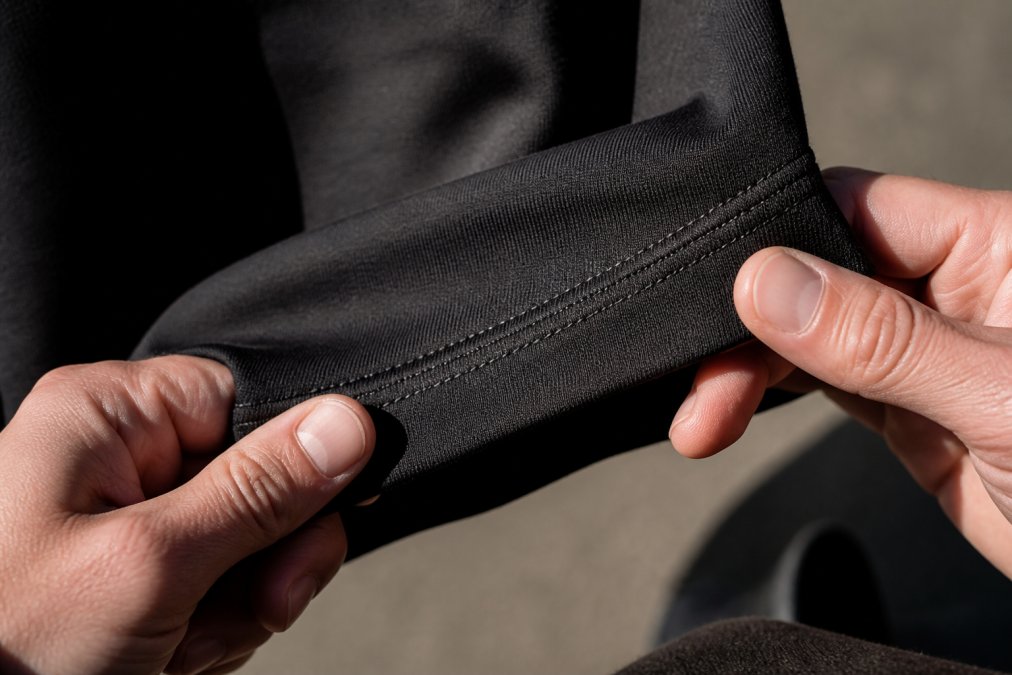
Double-stitched hems prevent the bottom of your shirt or hoodie from rolling up or fraying. The hem takes constant friction against your belt, waistband, and whatever you lean against. A properly finished hem uses a coverstitch that lies flat and resists unraveling.
Drop shoulders and overlapped necklines aren't just style choices. An overlapped neckline adds fabric and structure where the collar meets the shoulder, preventing the neck from stretching out. Set-in sleeves with proper seam allowance give the garment room to move without pulling at the seams.
The inside of the garment tells the real story. Look for single-jersey neck tape on the back of the collar and a self-fabric half moon inside the back. These details prevent stretching and add reinforcement where the garment experiences the most tension.
High-Quality Streetwear Hoodies That Hold Up to the Grind
When you need a hoodie that survives daily wear, the PJR Built Different Premium Fleece Hoodie at NOK 851.50 sets the standard. It's built from 80% cotton fleece that's thick where it counts and soft where it matters, designed for people who move with intention and don't dress like everyone else.
For those who want maximum structure and warmth, the Unisex Super Heavyweight Hoodie at NOK 505.70 delivers dense fabric with a clean, modern finish. This is heavyweight done right, with a structured relaxed fit that holds its shape through repeated wear.

The Men's Box Hoodie at NOK 422.50 offers a different approach to durability. Made from heavyweight, tightly knit fleece with a 100% cotton exterior, it features drop shoulders and an overlapped neckline for a boxy silhouette that looks fresh out of the box. The 339 GSM fabric weight gives it serious substance without sacrificing softness.
| Hoodie | Price (NOK) | Fabric Weight | Key Feature | Best For |
|---|---|---|---|---|
| Premium Fleece Hoodie | 851.50 | Heavyweight | 80% cotton fleece blend | Everyday durability and street style |
| Super Heavyweight Hoodie | 505.70 | Dense heavyweight | Structured relaxed fit | Maximum warmth and structure |
| Men's Box Hoodie | 422.50 | 339 GSM | 100% cotton exterior | Clean boxy silhouette with lasting shape |
Each of these hoodies uses construction techniques that address the common failure points: reinforced seams, quality ribbing, and heavyweight fabrics that resist shrinkage and pilling.
Rugged Apparel for Outdoor Professionals: Built for Work
Rugged apparel for outdoor professionals demands more than street style. It requires clothing that withstands abrasion, temperature swings, and the physical demands of the job while still looking sharp when the workday ends.
The Garment-Dyed Heavyweight Long-Sleeve Shirt at NOK 279.50 covers the transitional seasons. Its thick fabric and durable construction handle the abrasion of tools, equipment, and worksites while the garment-dyed finish gives it a broken-in feel from day one.

For those who need extra coverage, the Unisex Garment-Dyed Heavyweight Long Sleeve Tee at NOK 305.50 blends a vintage look with a sturdy heavyweight feel. The garment-dyed process means each piece has its own character, and the structured fit holds up to the demands of physical work.

The Real Test: Is Expensive Streetwear Durable Enough?
The answer isn't a simple yes or no. It's conditional: expensive streetwear is durable enough only when the price is tied to verifiable construction and material standards, not just a logo. The real test isn't just how it survives your washing machine; it's the transparency of the supply chain that produced it.
The Supply Chain as a Proxy for Quality
In streetwear, opacity can be a red flag. A brand that can't or won't tell you where their garments are made, and under what conditions, is often hiding that they use the same low-cost, high-volume factories as fast-fashion labels. Conversely, a brand transparent about its manufacturing is usually investing more in the process, which correlates with better quality control and higher-grade materials.
- Factory Relationships: Brands that own their factories or have long-term, exclusive partnerships with them can have direct oversight over stitching, fabric sourcing, and quality control. This can be why a garment from a vertically-integrated brand will often outlast a piece from a brand that outsources to the lowest bidder.
- Labor Ethics: While not a direct measure of fabric strength, ethical labor practices can be an indicator of overall brand integrity. A brand that pays fair wages and maintains safe working conditions may be less likely to cut corners on materials to save a few kroner. The logic is simple: if they're willing to invest in people, they may be willing to invest in quality cotton.
The Cost-Per-Wear Calculation with Real Numbers
Let's move beyond theory and look at the actual math. The 'cost-per-wear' metric is a way to evaluate a purchase.
- The Cheap Option: A budget hoodie at NOK 300 might last 6 months before it pills, fades, and loses its shape (peer-reviewed research). If worn twice a week, that's roughly 52 wears. The cost-per-wear would be NOK 5.77.
- The Mid-Range Option: A mid-tier hoodie at NOK 600 might last 2 years before showing significant wear. At twice a week, that's 208 wears. The cost-per-wear would be NOK 2.88.
- The Premium Option: A high-quality, heavyweight hoodie at NOK 900, built with ring-spun cotton and reinforced seams, can last 5 years or more. At twice a week, that's 520 wears. The cost-per-wear would be NOK 1.73.
The premium option can be more economical. This isn't about luxury; it's about making a financially sound decision.
The Physical Inspection Checklist
Before you hand over your money, put the garment through a final, physical inspection.
- The Stretch Test: Grab the fabric at the bottom hem and pull it horizontally. Does it snap back immediately, or does it stay stretched? A garment with poor recovery will bag out at the elbows and knees.
- The Collar Snap: Flick the collar. Does it make a crisp, sharp sound, or a dull thud? A crisp snap indicates a tight, dense ribbing that will hold its shape.
- The Seam Squeeze: Pinch the fabric on either side of a seam and pull. If you see gaps between the stitches or the thread pulls, the construction is weak.
- The Light Test: Hold the fabric up to a bright light. If you can see a grid of light through the knit, it's too loose and will not provide adequate warmth or durability.
The Verdict on the Grind
Expensive streetwear is durable enough when it's built with the intent to last. It's durable when the brand can articulate why their 350 GSM fleece beats a competitor's 300 GSM fleece. It's durable when the stitching is tight, the fibers are long, and the factory is accountable.
At PJR Built Different, our brand was born from 20 years in professional kitchens where clothing is pushed to its absolute limit. We use heavyweight, combed ring-spun cottons. We reinforce our seams. We stand behind our construction. That's not hype; that's the standard. That's what you're paying for.
Frequently Asked Questions
Does a higher price tag always guarantee better fabric quality?
No. Price often reflects branding and hype culture, not fabric integrity. A 400 NOK tee with 180 GSM ring-spun cotton can outlast a 1200 NOK piece with thin synthetic fibers. Check the fabric weight, stitch density, and whether the seams are reinforced. Those specs determine durability, not the logo.
What is the best fabric weight for durable streetwear?
Look for 220 GSM (6.5 oz/yd²) or higher in t-shirts and 339 GSM (10 oz/yd²) or more in hoodies. Heavyweight fleece and combed ring-spun cotton resist pilling, hold their shape, and survive repeated washing. Anything below 180 GSM will likely lose fit retention and show wear within months.
How should I care for premium streetwear to make it last?
Wash inside out in cold water at 30°C and skip the dryer. High heat causes shrinkage and breaks down natural fibers. Hang dry heavyweight cotton to preserve colorfastness and prevent fabric distortion. This single habit extends garment longevity more than any other factor.
What construction details separate durable streetwear from fast fashion?
Check for reinforced seams at stress points like shoulders and underarms, double-stitched hems, and wide neck ribbing that won't stretch out. A double-layered hood and self-fabric half moon inside the back add structure. Side-seamed construction prevents twisting. These details cost more to produce and signal real craftsmanship.
The real test of durability isn't the price tag, it's how a garment survives the demands of your life. Most streetwear fails because it prioritizes image over construction. At PJR Built Different, we build heavyweight hoodies and tees with ring-spun cotton, reinforced seams, and quality control that reflect two decades of real-world experience. Contact us to find gear that stands up to your grind, because you're built different and your clothing should be too.
Editorial Team